(ENGLISH below)
Tramo I / Part I – Bellevueplatz – Glanzenberg, 12,8 km.
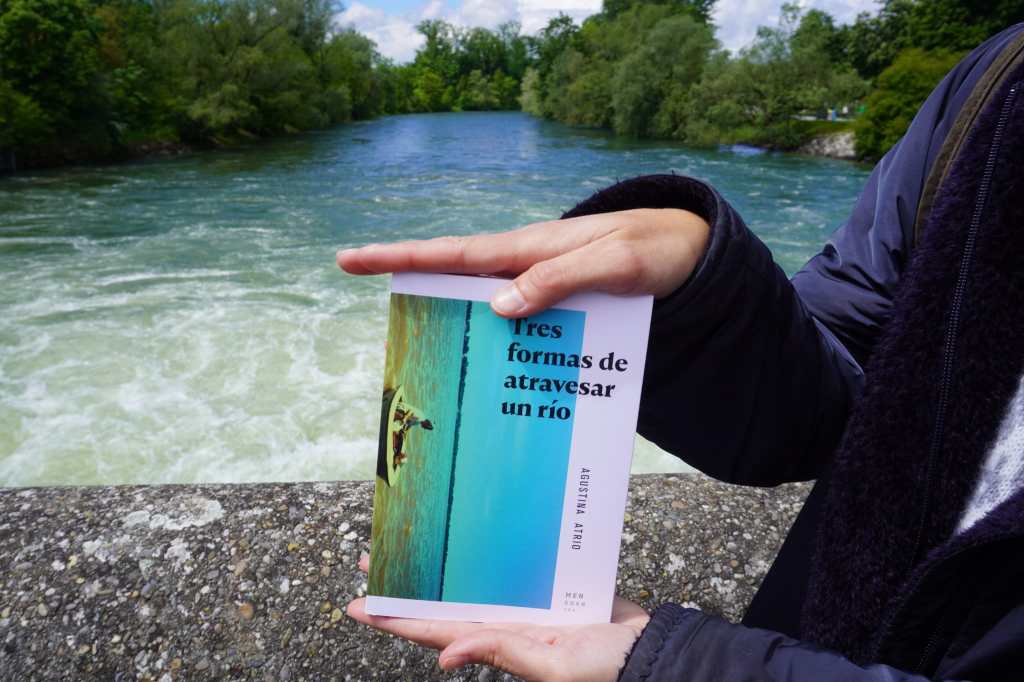
Llega el día del primer paseo que organizo en esta ciudad, Zürich, todavía tan nueva para mí. Llevo un tiempo pensando en cómo trasladar el proyecto que nació y se desarrolló en Madrid a esta ciudad tan distinta en tamaño, forma y características. Pienso pues, que si acá vine en parte por el agua, si llegué en avión pero también literariamente navegando los ríos en una travesía imaginaria en Tres formas de atravesar un río, el caminar nos puede llevar hacia ellos. Caminaremos entonces desde el centro de la ciudad hacia su exterior, siguiendo sus orillas hasta allí donde otros entramados fluviales se abran a nuestro paso.
Seguiremos el Limmat, ese río que más que dividir a la ciudad en dos, la ensambla. La intención es llegar, tramo a tramo, hasta Basel, reproduciendo en sentido contrario la travesía fluvial imaginaria que realicé para llegar hasta aquí desde el Mar del Norte. Del Limmat al Aare, del Aare al Rin. De cada tramo escribiré un relato sobre el paseo, registro que siempre será incompleto al no poder estar en cada conversación, en cada reflexión que nace de la caminata.
Nos encontramos el domingo veintitrés de mayo en Bellevueplatz con un día que alterna entre la llovizna y la nubosidad variable. Hemos acordado que el paseo se hace de todos modos; hace un mes que llueve en Zürich y ya no nos dejamos detener.
No todos estaremos todo el recorrido, pero si contamos todos los que fuimos, fuimos ocho. Tom, Yannik, María, Marte, Elena, Virginia, Lucas y yo, Agustina. Nada mal para el primer encuentro.
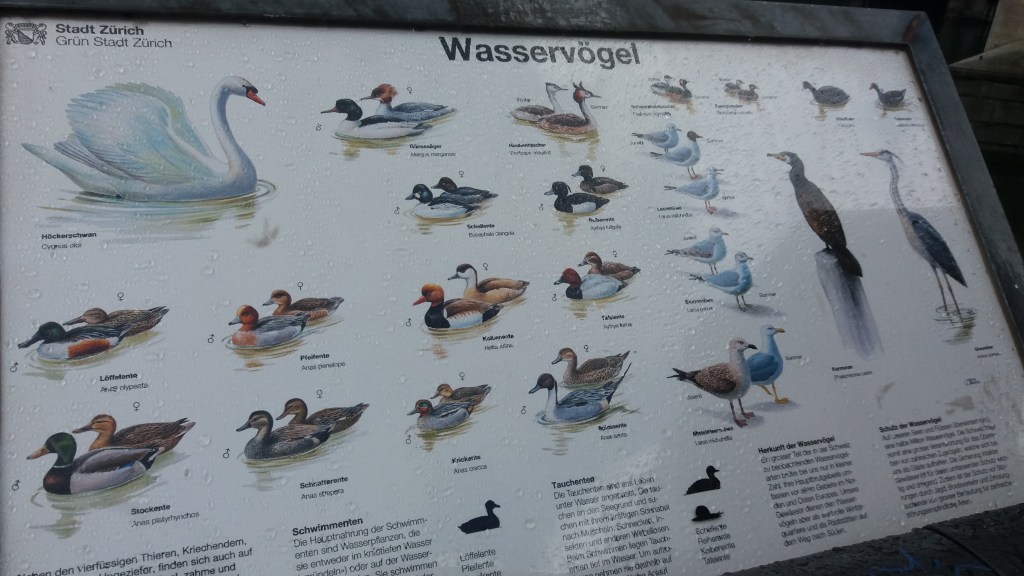
Partimos cerca de las 10.30 pasando por debajo del Quaibrücke, allí donde tiene su fuente el Limmat. Bajo el puente, en la pasarela, caminamos bajo el nivel del agua, quedando a la altura de los cuellos de los cisnes que pasaban. Una vez cruzado el puente por debajo, volvimos a emerger a la ciudad y comenzamos a atravesar el centro histórico, la ciudad vieja, encontrando letreros que nos presentaron a las aves del río y que se preguntan por el pasado (o futuro, de continuar el calentamiento global) marino de Zurich.

Caminamos por esta zona por todos conocida pero aún así prestando atención a los detalles y compartiendo informaciones: el Platzpitz y su pasado de meca de la heroína, la flora espontánea que explota en los canteros y a los bordes del camino a diferencia de otras ciudades que conocemos, como Madrid, donde se podó luego de que creciera libremente durante la cuarentena del 2020, cines porno de vinicultores suizos en Chile.
Mientras caminamos también compartimos nuestras prácticas y experiencias: hay caminantes que también trabajan con o en el río. María trabaja con los ríos de Colombia, aquellos en cuyas aguas se hace desaparecer personas, y la memoria que construyen los habitantes de sus orillas. Lucas junta objetos y piezas que aparecen en las orillas del Limmat con las que construye sus obras de arte. Durante el almuerzo nos mostró una pieza de barro que pertenecía a un horno del medioevo.
Caminamos lento, hacemos paradas y conversamos. A veces llueve y otras sale el sol. Se hace evidente que no llegaremos al punto final planeado pero no importa, se aplica la frase que dice que se hace camino al andar.
No todos venimos de ríos: hay quienes nacieron cerca de lagos o de las montañas, o entre ríos estrechos o urbanos que no les resultan cercanos. ¿Qué vínculo tenemos con el agua?
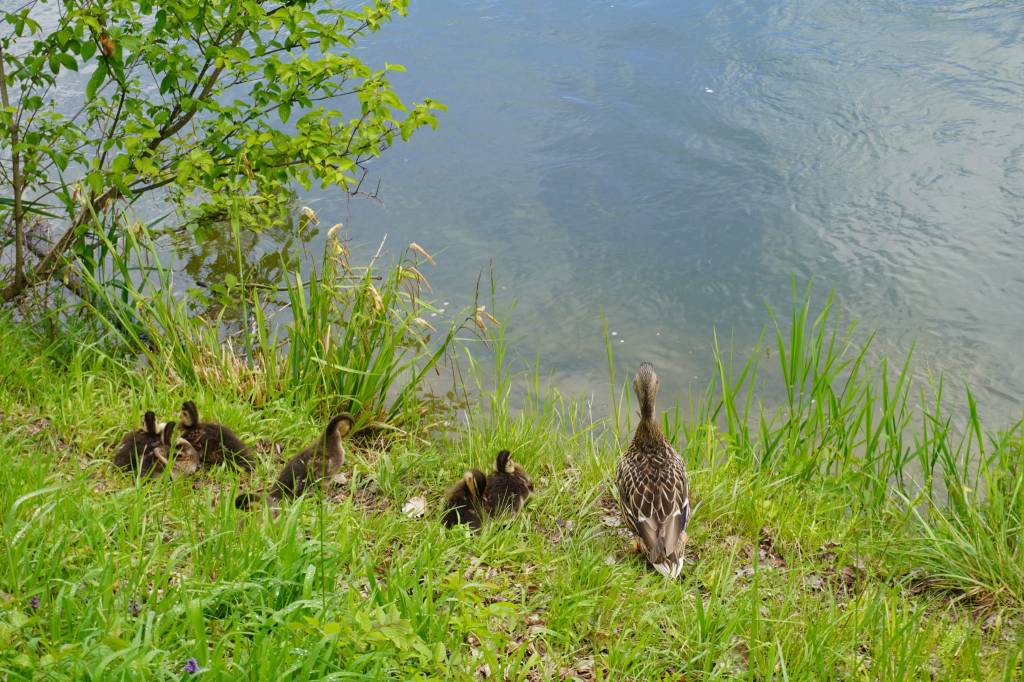
Llegamos a la isla, Werdinsel, e hicimos una pausa baño, almuerzo, café y bebidas. Allí compartí un fragmento de Tres formas de atravesar un río en el que investigo la historia de la ciudad con el Limmat: los baños romanos, la ruta fluvial, el aseo y la higiene urbana, el ocio actual en el agua. Hablamos de balnearios, baños termales, trayectos en botes inflables en el periodo estivo, pero también de IKEA y sus diseños, lugar que llegó a la conversación porque proyectamos terminar el recorrido cerca de donde se encuentra ubicada esta tienda.
“La ruta que he tomado para llegar hasta aquí, aquella que desde el Limmat se conecta con el Rin, fue la mayor ruta transregional de agua de la zona hasta la construcción de la red de carreteras, durante el siglo XIX. Ya en tiempos romanos, el Limmat era utilizado como ruta de transporte de mercancías.”
Continuamos camino, más descansados y con entusiasmo por salir de Zürich. Cruzamos un puente azul y volvimos a la orilla de nuestro sendero, observando la zona nudista de verano. Ese día tan solo se adivinaba un cuerpo desnudo entre los pastos.
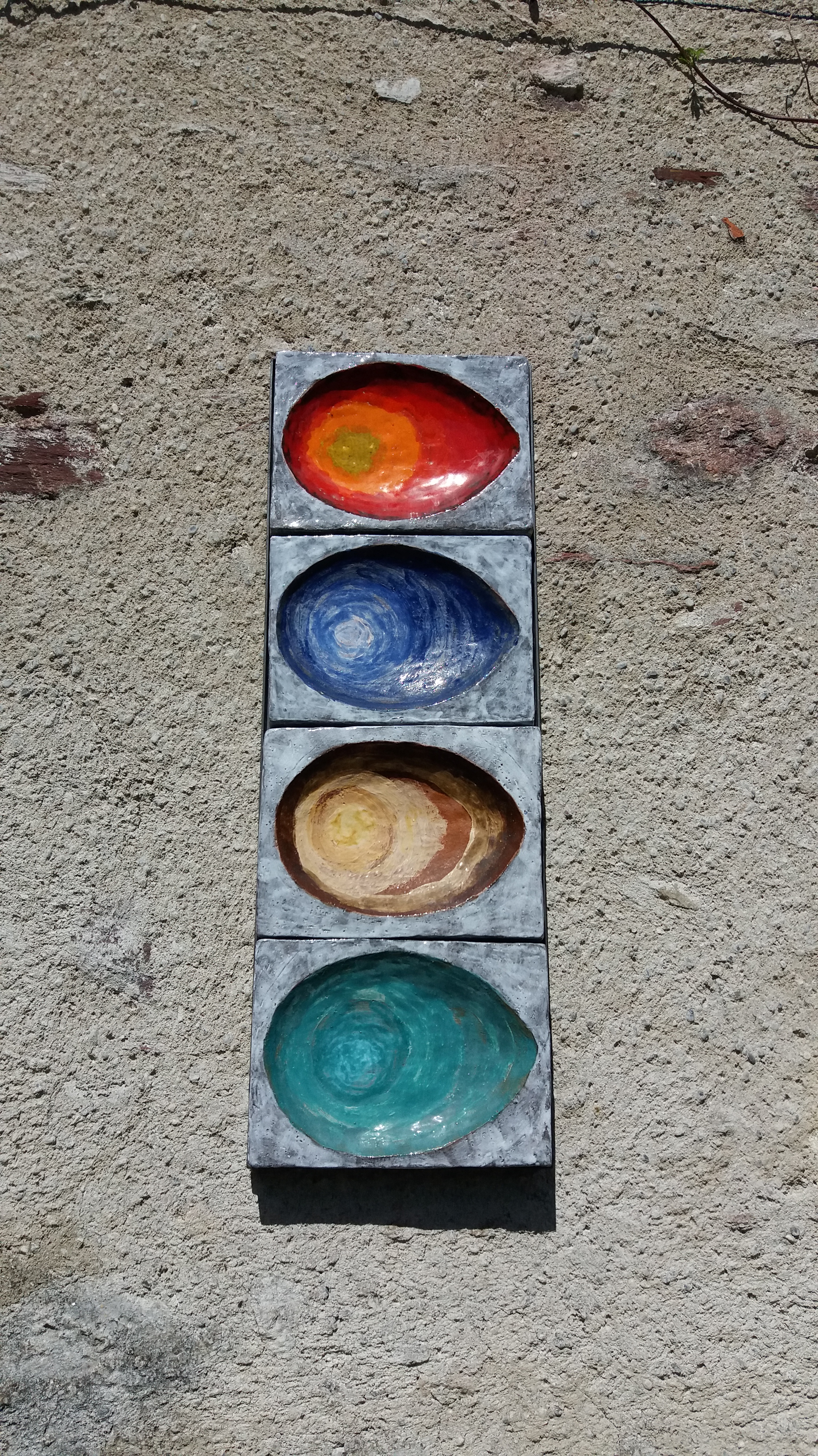
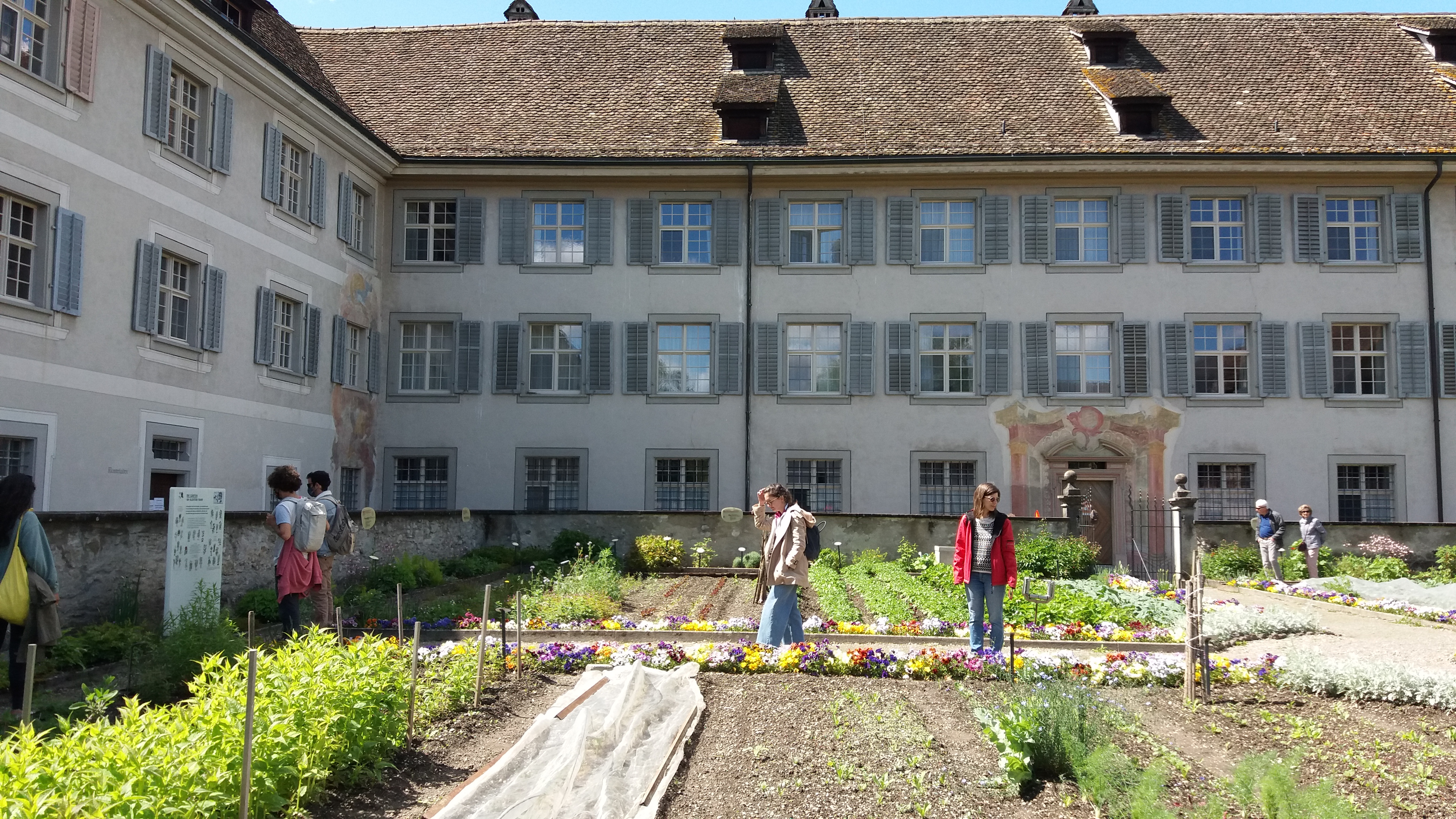
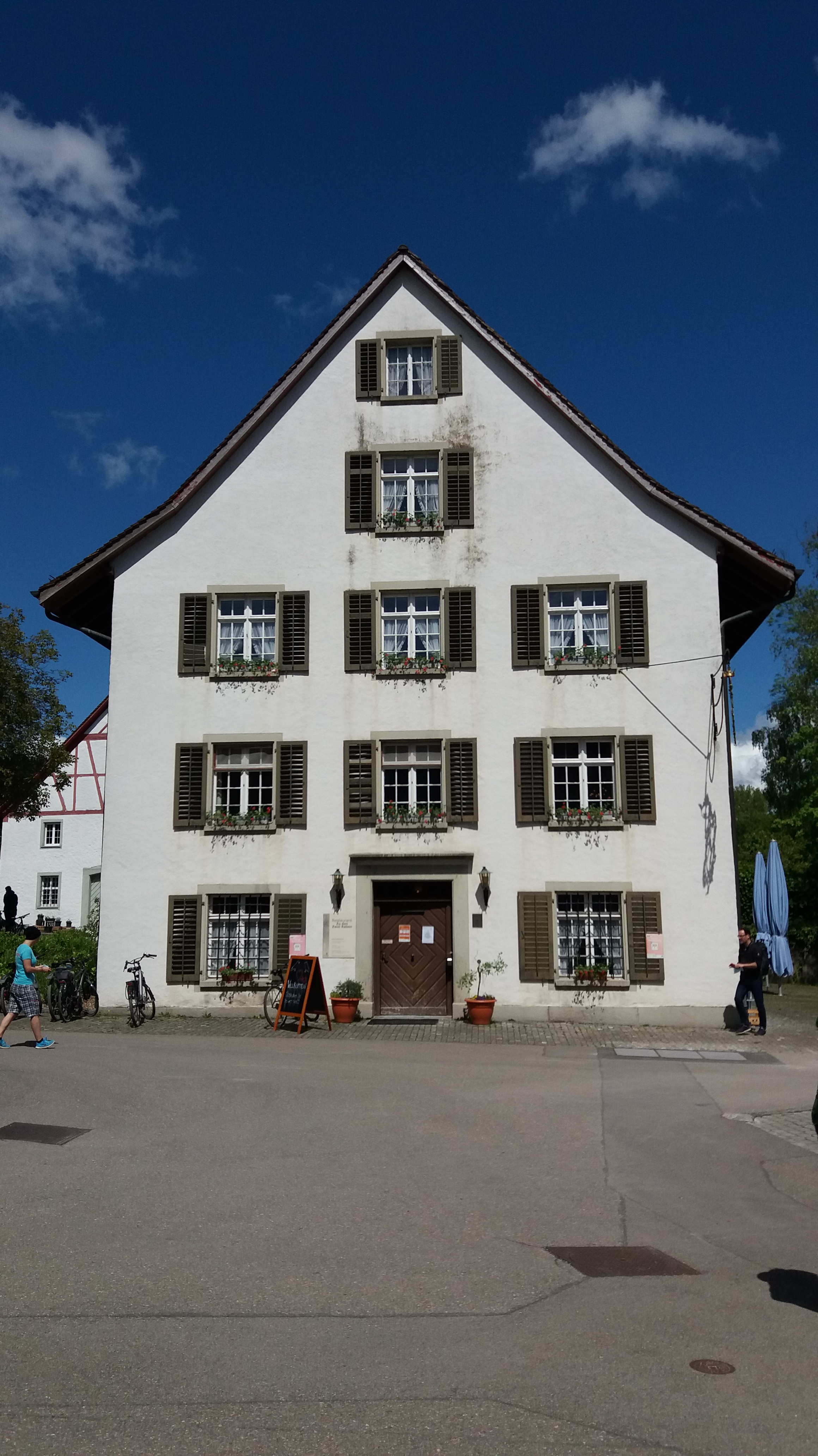
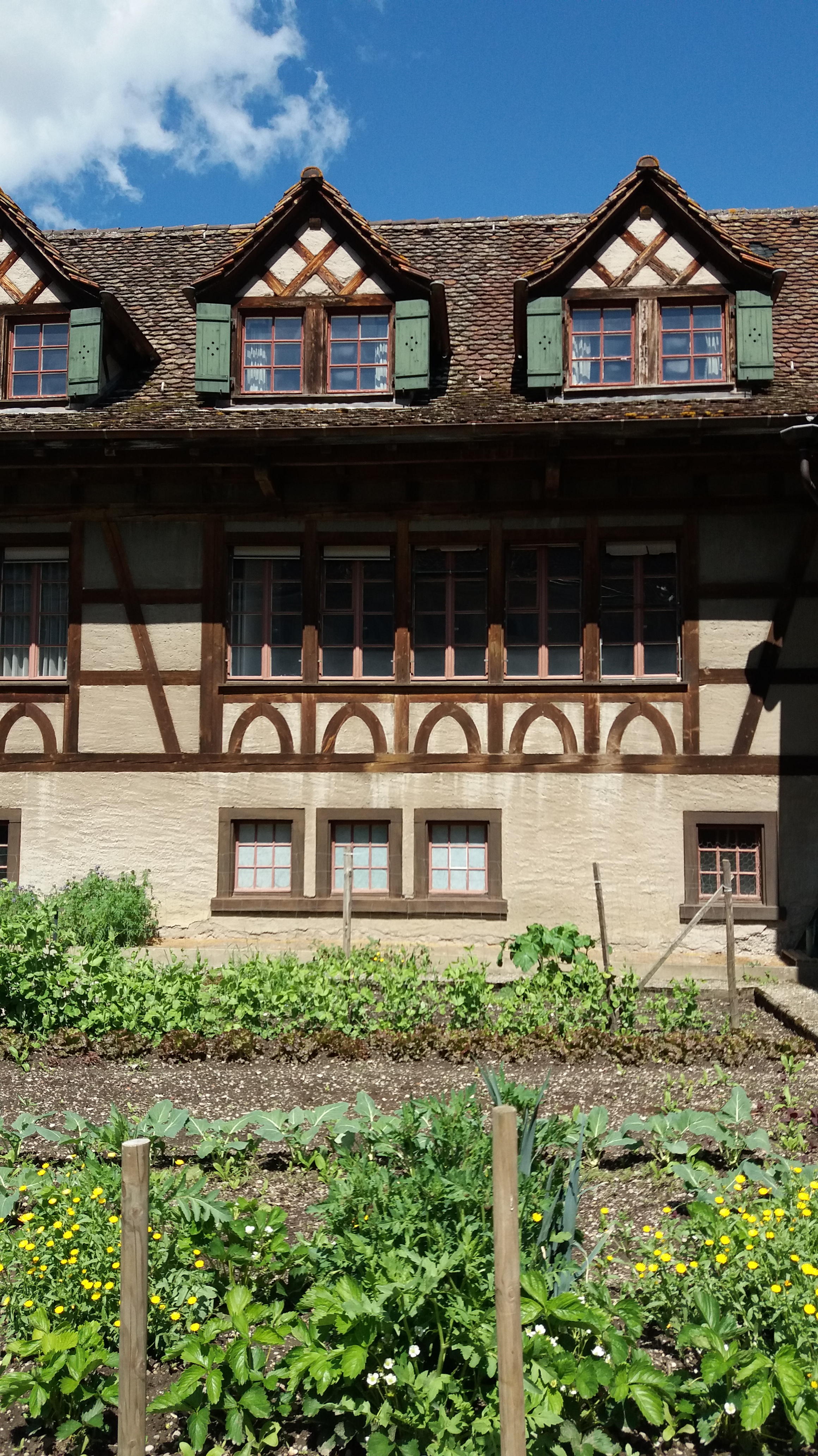
Continuamos nuestro camino, ahora sí bajo una tarde soleada, y llegamos a Kloster Fahr (el monasterio Fahr), esperando encontrar cerveza, mesas y un lugar para descansar tomando algo. Efectivamente lo encontramos, pero antes nos topamos con un lugar extraño, una mezcla de zoológico de aves, protectora y bar con terraza lleno de estatuas de animales atravesado por el sendero, dándonos la impresión de haber llegado al destino de unas vacaciones. Luego de detenernos a observar este colorido lugar con olor a animales, llegamos al Kloster de las benedictinas, un conjunto de varios edificios antiguos y rústicos que se encuentran en una especie de plaza con bebedero. Allí paseamos por sus jardines, donde Tom habló de la historia del diseño arquitectónico de los jardines, y conversamos sobre la vida de las monjas y la opción que resultaba esta forma de vida cuando las mujeres querían estudiar, leer y escribir y no tenían otro modo de hacerlo (en el pasado, en Europa, en el presente en países de otros continentes). En el jardín nos encontramos con unas piezas de cerámica representando los cuatro elementos y otra vez nos topamos con nuestra guía en este recorrido, el agua. También lo hicimos al hablar de Silja Walter, monja poeta (1919-2011) que vivió en el monasterio, donde escribió influenciada por el río y su fluir a escasos metros de su habitación.
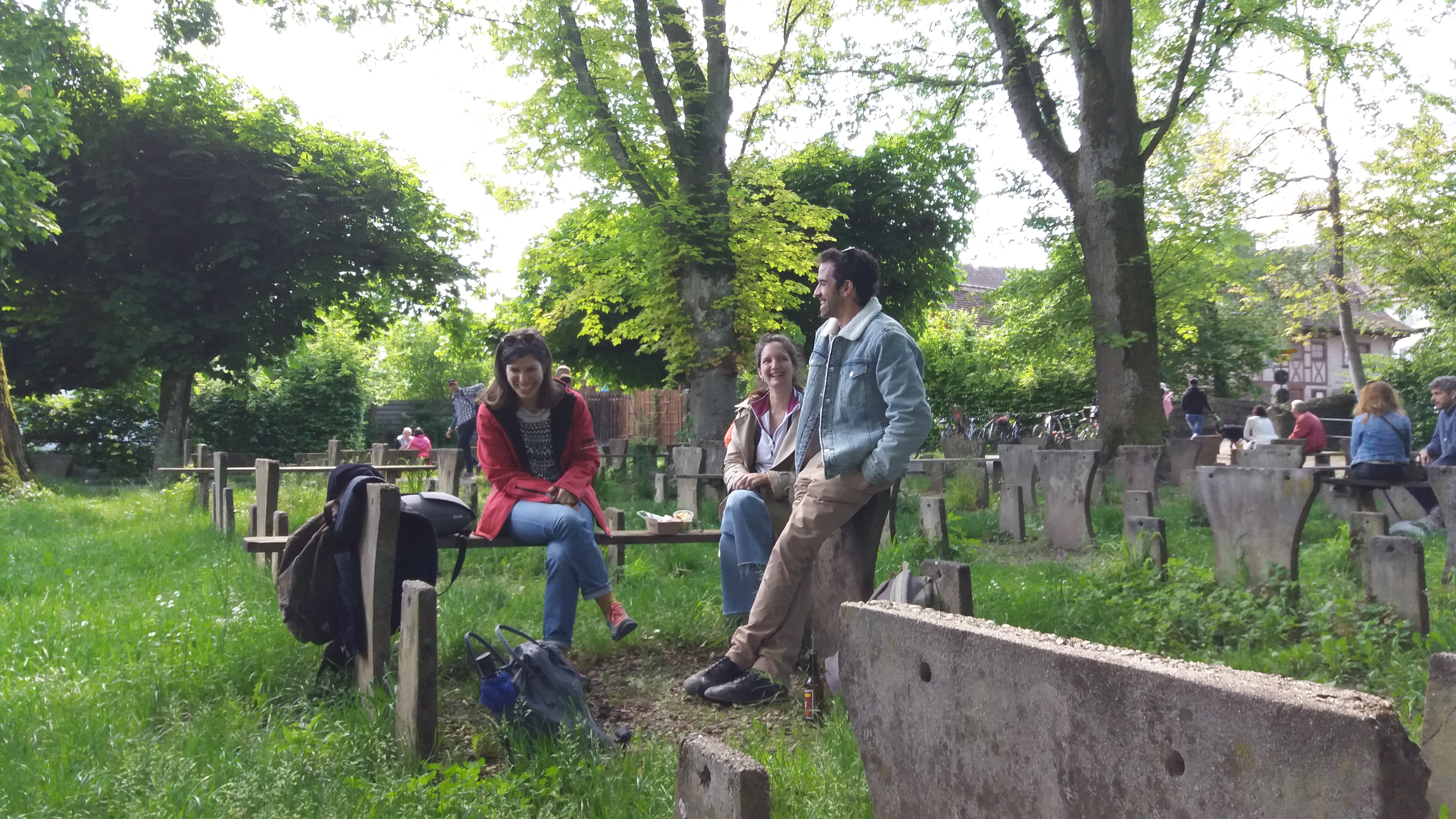
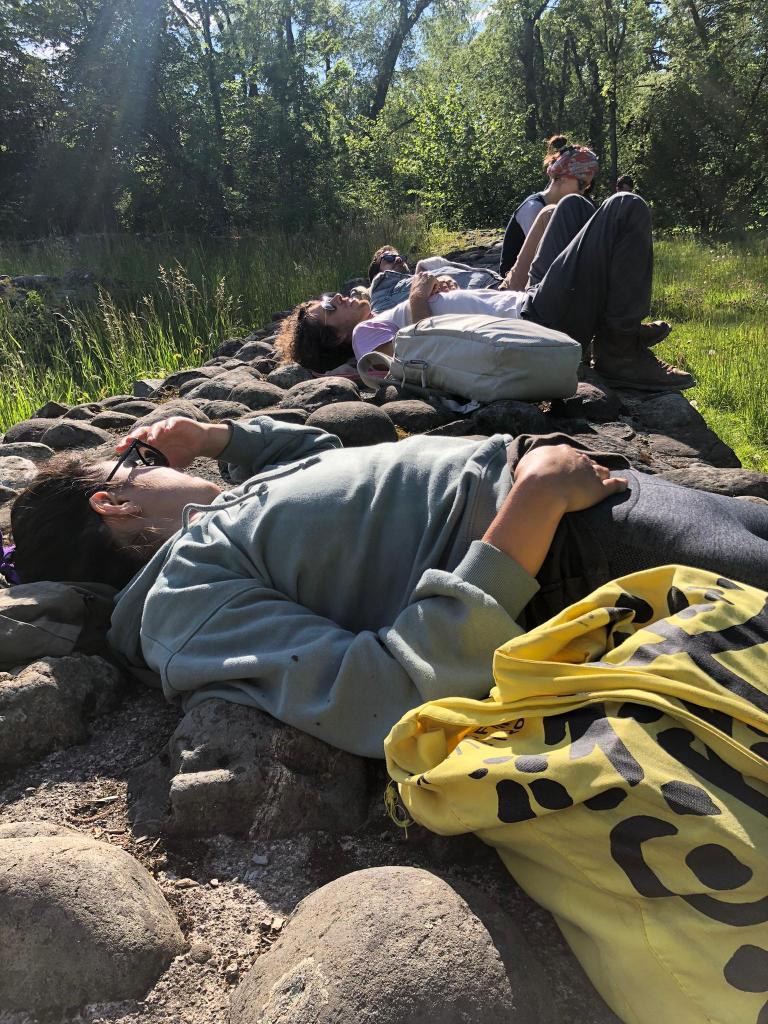
Luego de una pausa en un cementerio de bancos y mesas donde comimos helados bio, frutas y otras compras de la tienda del monasterio, continuamos camino encontrándonos con que podíamos hacer una breve parte de este cruzando el Limmat en embarcación. El trayecto duró pocos minutos, lo suficiente para llevarnos de una orilla a otra, pero fue un buen cierre para la etapa en Fahr. Seguimos caminando con idea de llegar a Dietikon, fin de este primer tramo, pero otra vez volvimos a dejarnos llevar por lo que aparecía ante nuestros pasos y terminamos arrojándonos en las ruinas de un castillo, donde descansamos nuevamente de nuestras ocho horas caminando juntos. Allí, mientras algunos dormitaban, leí un fragmento de Viaje a la luna de Ríos, escrito por Martin Michael Driessen, libro que había cargado durante todo el camino y que habla de un almadiero que quiere, como yo ahora, llegar al Rin.
“El sueño de Konrad era acompañar a los hombres en una almadía. Las almadías eran unas balsas armadas con los troncos más fuertes y largos, que se unían en tramos cada vez más grandes, y que cada año recorrían el Rodach, el Meno y el Rin, hasta llegar a Holanda.”
Luego de esa siesta, con nuestros cuerpos más pesados y el sol sintiéndose en nuestras cabezas, decidimos acercar la meta y detenernos en Glanzenberg para tomar el tren y regresar a la ciudad. Nueve horas después de habernos encontrado, nos separamos para ir a descansar hasta un próximo tramo de este largo y fragmentado paseo.
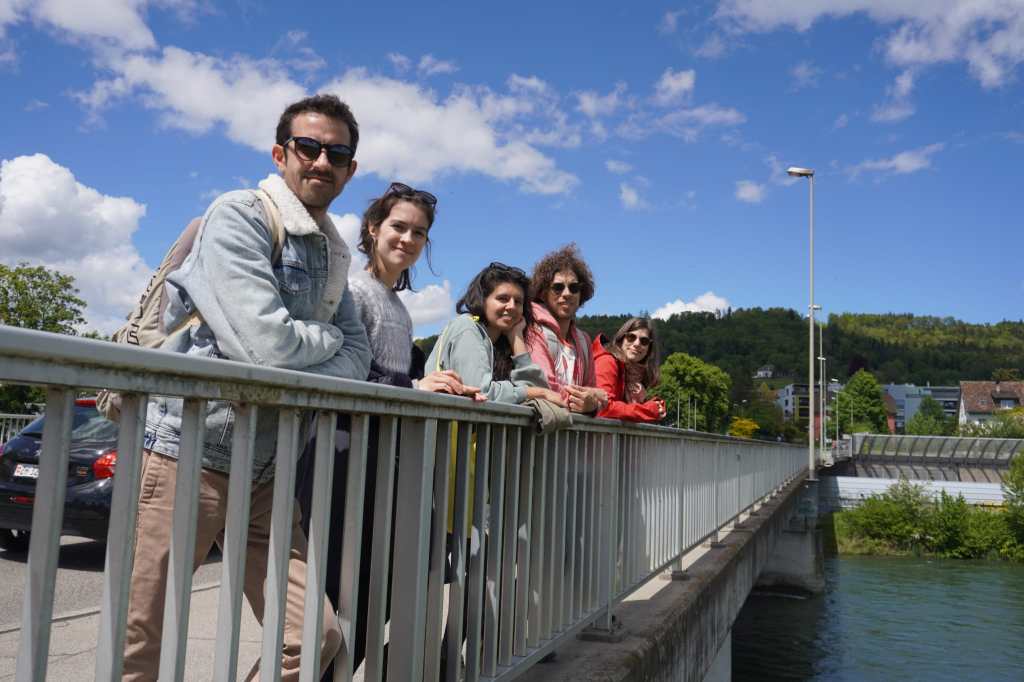
Fotos de Elena, Virginia y Agustina
ENGLISH
The day of the first walk I organize in this city, Zürich, which is still so new to me, arrived. I have been thinking for some time about how to transfer the project that was born and developed in Madrid to this city so different in size, shape and characteristics. But I think, if I came here partly because of the water, if I arrived by plane but also literally navigating the rivers in an imaginary journey in Tres formas de atravesar un río, walking can lead us to them. We will walk from the center of the city towards its exterior, following its banks to where other river networks open up in our path.
We will follow the Limmat, the river that, rather than dividing the city in two, assembles it. The intention is to get, section by section, to Basel, reproducing in the opposite direction the imaginary river trip that I made to get here from the North Sea. From the Limmat to the Aare, from the Aare to the Rhine. From each section I will write a story about the walk, a record that will always be incomplete as I cannot be in each conversation, in each reflection that arises from the walk.
We meet on Sunday May 23rd at Bellevueplatz with a day that alternates between drizzle and cloudy. We have agreed that the walk is done anyway; It’s been raining in Zürich for a month and we don’t let ourselves be stopped anymore.
Not all of us will walk all the way, but if we count who were, we were eight. Tom, Yannik, María, Marte, Elena, Virginia, Lucas and Agustina. Not bad for the first meeting.
We leave at around 10:30 am, passing under the Quaibrücke, where the Limmat has its source. Under the bridge, on the footbridge through which we walked, we walked under the water level, remaining at the height of the passing swans’s necks. Once we crossed the bridge underneath, we re-emerged into the city and began to cross the historical center, the old city, finding signs that introduced us to the birds of the river and that wonder about the past (or future, if global warming continues) of Zurich’s sea.
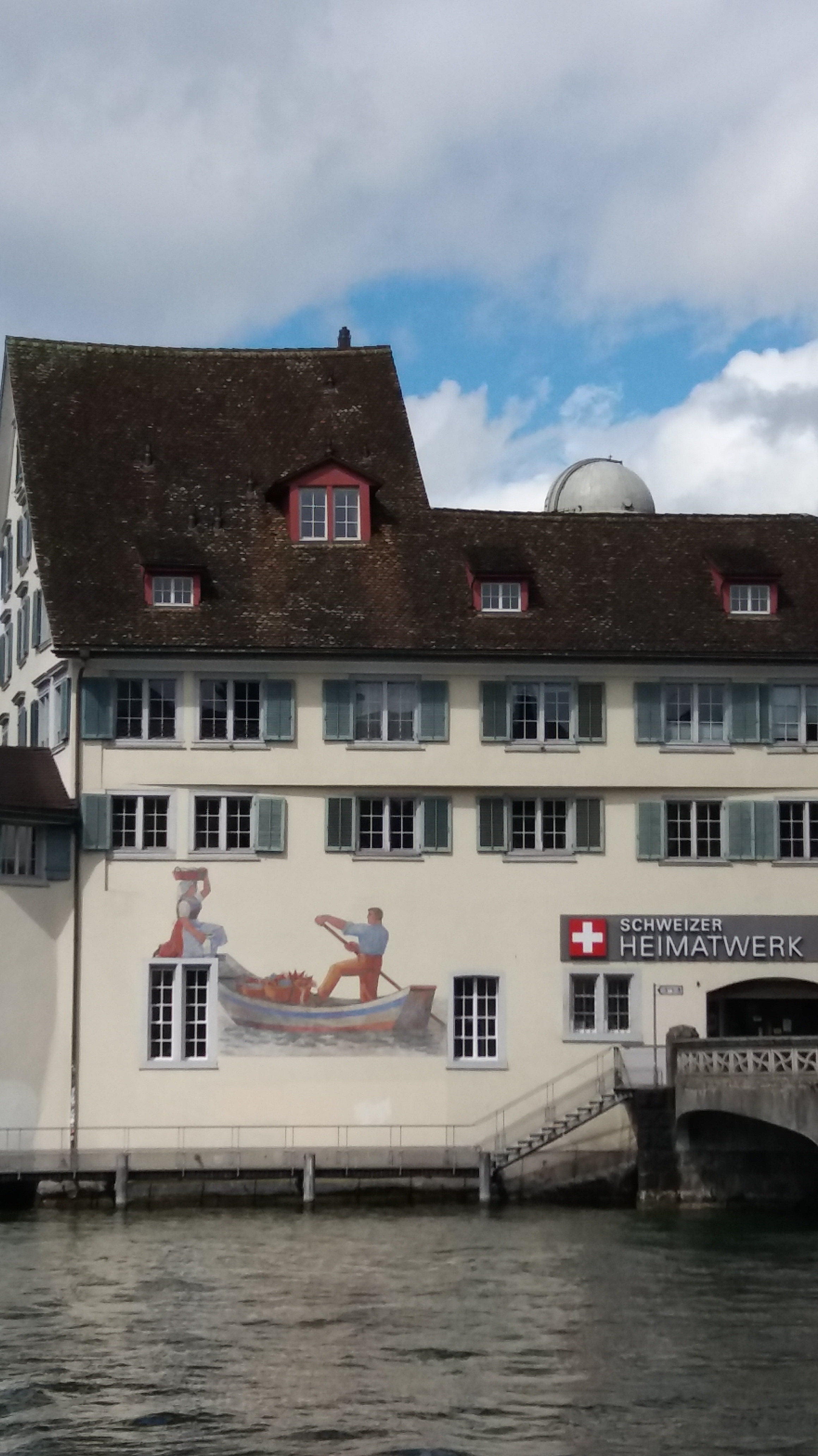
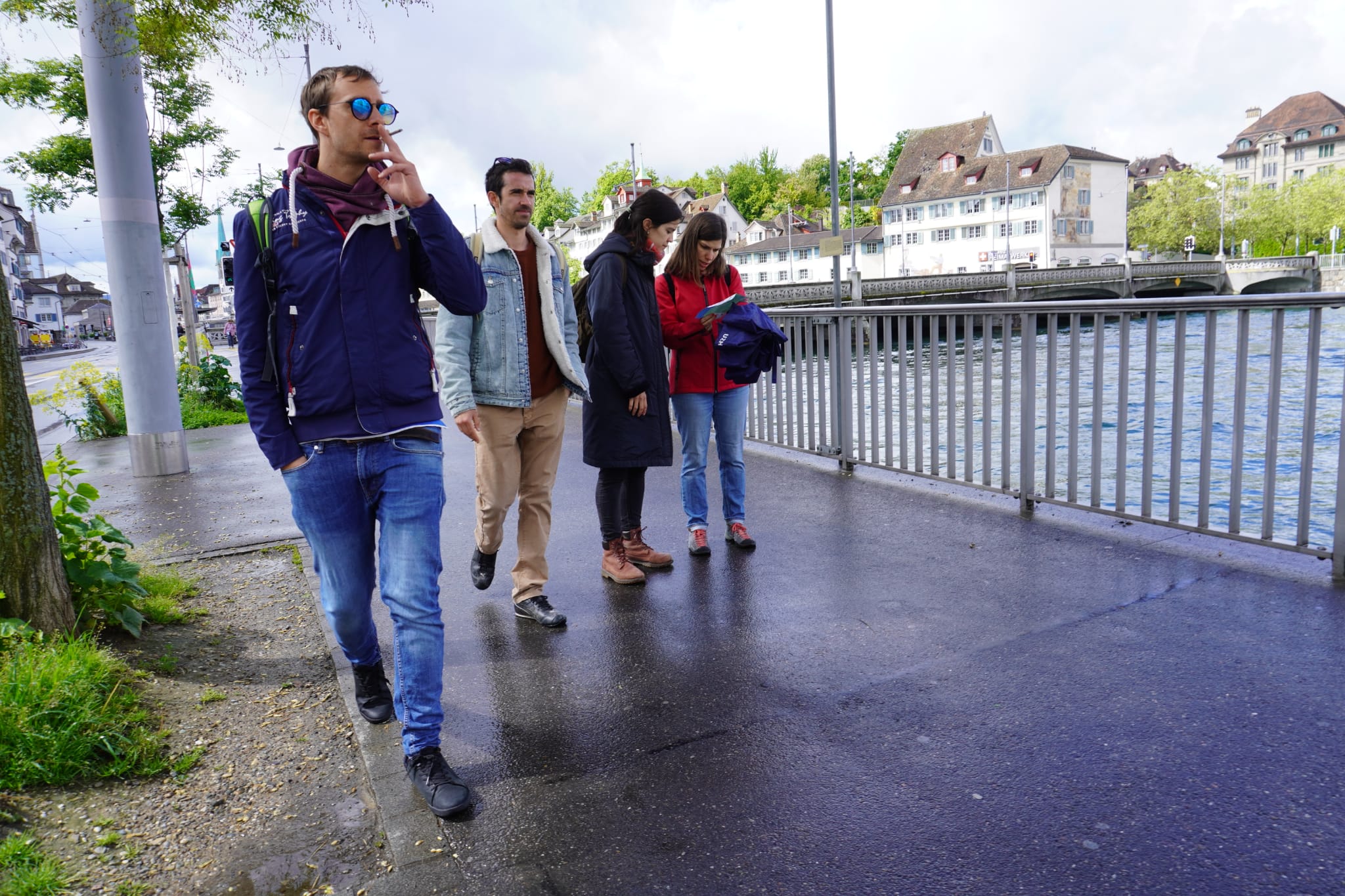
We walk through this area known to all but still paying attention to details and sharing information: the Platzpitz and its past as a mecca for heroin, the spontaneous flora that explodes in the flowerbeds and on the roadside unlike other cities we know, like Madrid, where it was cut after it grew freely during the quarantine of 2020, and porn cinemas of Swiss winemakers in Chile.
While we walk we also share our practices: there are walkers who also work with or in the river. María works with the rivers of Colombia, those in whose waters people are made to disappear, and the memory that the inhabitants of their banks build. Lucas collects objects and pieces that appear on the banks of the Limmat with which he builds his pieces of art. During lunch he showed us a piece of clay that belonged to a medieval oven.
We walk slowly, we stop and talk. Sometimes it rains and sometimes the sun comes out. It becomes clear that we will not reach the final point thought but it does not matter, the phrase that says that the path is made by walking is applied.
Not all of us come from rivers: there are those who were born near lakes or mountains, or between narrow or urban rivers that are not close to them. What link do we have with water?
We got to the island, Werdinsel, and took a bath, lunch, coffee and drinks break. There I shared a fragment of Tres formas de atravesar un río in which I investigate the history of the city with the Limmat: the Roman baths, the river route, urban hygiene and current leisure in the water. We talked about spas, hot springs, trips in inflatable boats during the summer period, but also about IKEA and its designs, a place that came to the conversation because we plan to finish the tour near where this store is located.
“The route I have taken to get here, the one that connects the Limmat to the Rhine, was the largest trans-regional water route in the area until the construction of the road network in the 19th century. Already in Roman times, the Limmat was used as a transport route for goods.»
We continue our way, more rested and with enthusiasm to leave Zürich. We crossed a blue bridge and returned to the edge of our path, observing the summer nudist area. That day only a naked body could be guessed among the grasses.
We continued on our way, now on a sunny afternoon, and arrived at Kloster Fahr (the Fahr monastery), hoping to find beer, tables and a place to rest with a drink. We did indeed find it, but first we came across a strange place, a mixture of a bird zoo, a shelter and a bar with a terrace full of statues of animals crossed by the path, giving us the impression of having arrived at the destination of a vacation. After stopping to observe this colorful place with the smell of animals, we arrived at the Kloster of Benedictines, a set of several old and rustic buildings that are located in a kind of square with a drinking fountain. There we walked through its gardens, where Tom spoke about the history of the architectural design of gardens, and we talked about the life of nuns and the option that this way of life resulted when women wanted to study, read and write and had no other way to do so (in the past in Europe, in the present in some countries on other continents). In the garden we found some ceramic pieces representing the four elements and again we came across our guide on this tour, the water. We also did it when talking about Silja Walter, a poet nun (1919-2011) who lived in the monastery, where she wrote, influenced by the river and its flow a few meters from her room.

After a pause in a cemetery of benches and tables where we ate organic ice cream, fruits and other purchases from the monastery shop, we continued our way finding that we could do a brief part of it by crossing the Limmat by boat. The journey lasted a few minutes, long enough to take us from one shore to another, but it was a good closing for the stage in Fahr. We continued walking with the idea of reaching Dietikon, the end of this first section, but once again we let ourselves be carried away by what appeared before our steps and we ended up throwing ourselves in the ruins of a castle, where we rested again from our eight hours walking together. There, while some were dozing, I read an excerpt from Martin Michael Driessen’s Viaje a la luna from Ríos, a book that I had carried all the way and that tells of a rafter who wants, like me now, to reach the Rhine.
“Konrad’s dream was to accompany the men on a raft. The rafts were armed with the strongest and longest trunks, which were joined in increasingly larger sections, and each year they crossed the Rodach, the Main and the Rhine, until they reached Holland.»
After that nap, with our heavier bodies and the sun feeling in our heads, we decided to approach the goal and stop in Glanzenberg to catch the train and return to the city. Nine hours after meeting, we parted ways to rest until the next stretch of this long and fragmented walk.
(Translations are mine so they can have mistakes.)
Photos: Elena, Virginia y Agustina

 Despaseando