Tramo III / Part III: Baden – Siggenthal-Würenlingen, 13,8 km
(ENGLISH below)
Comenzamos la tercera etapa allí donde nos despedimos en la última caminata: Baden. El día nos recibió nublado, con intenciones de lluvia y sin embargo no nos llovió. Menos mal que el clima no nos echa atrás.
Con Paloma, Nico y Tom caminamos desde la estación de trenes hasta el río, tomando un ascensor público que nos hizo descender de la parte alta a la baja de la ciudad. Una vez en la orilla, caminamos comentando el pasado esplendor de Baden durante la época del turismo de baños termales. Allí, en sus orígenes, los primeros asentamientos romanos encontraron una fuente de agua caliente y fundaron la aldea Aquae Helveticae.
Los baños termales le trajeron un fuerte crecimiento de la ciudad durante el siglo XIX con el boom del turismo de baños y balnearios. Se construyeron hoteles, infraestructuras y se creó la primera línea de trenes de Suiza que conectaba Zürich y Baden en 1847. La ciudad fue visitada por personalidades como Goethe, Nietzsche y Thomas Mann. Paloma nos contó que algunos de ellos tienen sus estatuas en la ciudad o dan nombres a calles.
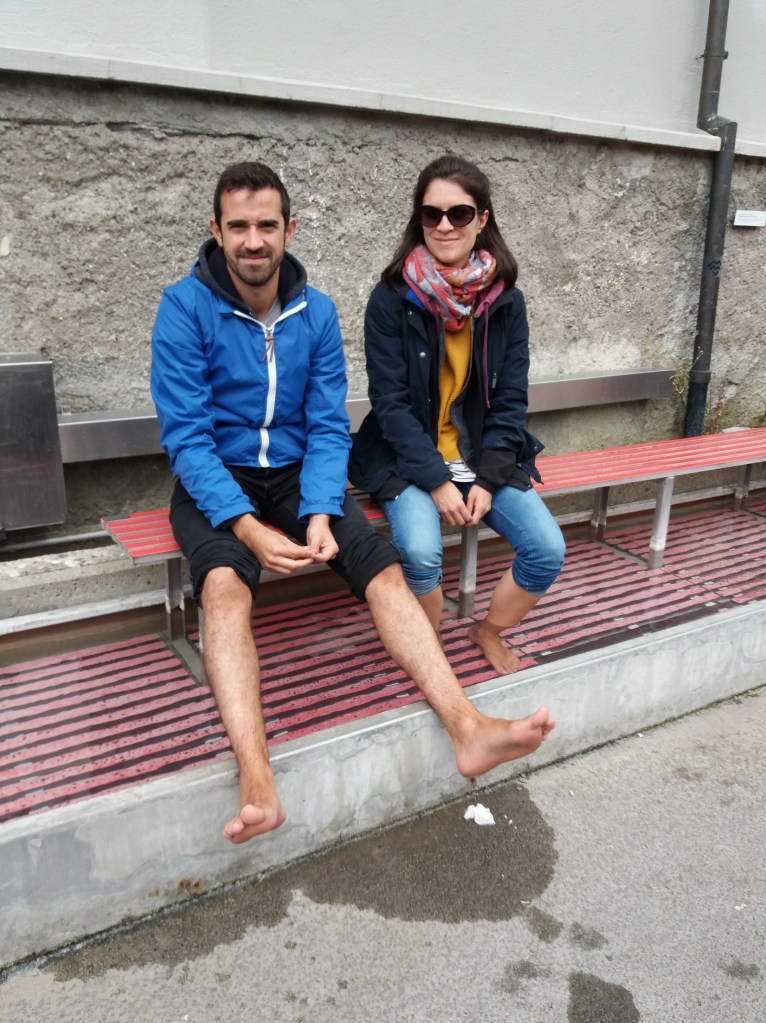
Caminando hacia el norte, vimos algunos hoteles llamativos y nos encontramos con pequeñas zonas públicas para remojar los pies en las aguas de Baden: una bañadera al aire libre y un banco, donde Tom y yo probamos remojar los pies.
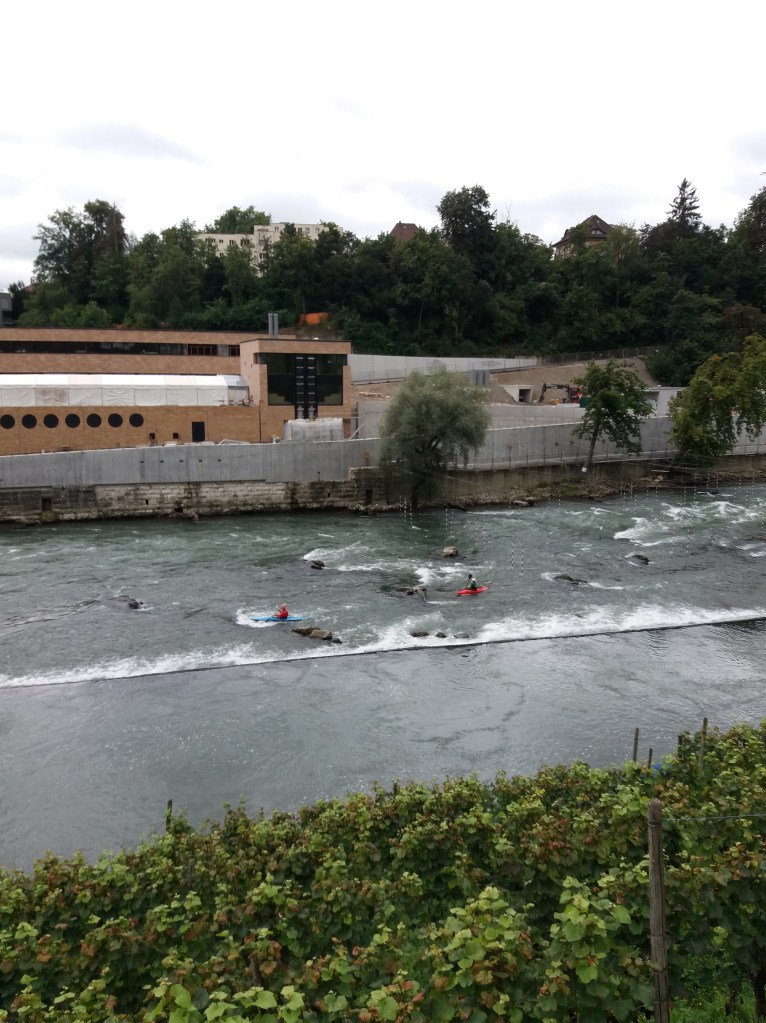
Continuando camino, vimos desde la orilla opuesta los baños termales que están siendo construidos por el arquitecto Mario Botta. No quedamos contentos con el edificio, y en lugar de detenernos a contemplarlo, observamos unos kayakistas que remaban en una zona rápida y rocosa del río. Saludándolos, dejamos atrás la ciudad.
A partir de entonces, atravesamos calles de casas monofamiliares, perdiendo el río de a tramos, hasta que llegamos a él y pudimos seguirlo por un largo trecho. Avanzando por senderos entre el río y jardines privados, se dio inicio a un “paseo de degustación” o “gardening tasting” en el que Paloma nos fue señalando los frutos y plantas comestibles que nos íbamos cruzando: ciruelas, moras, flores comestibles como Oenothera biennis, algunos más dulces, otros amargos.
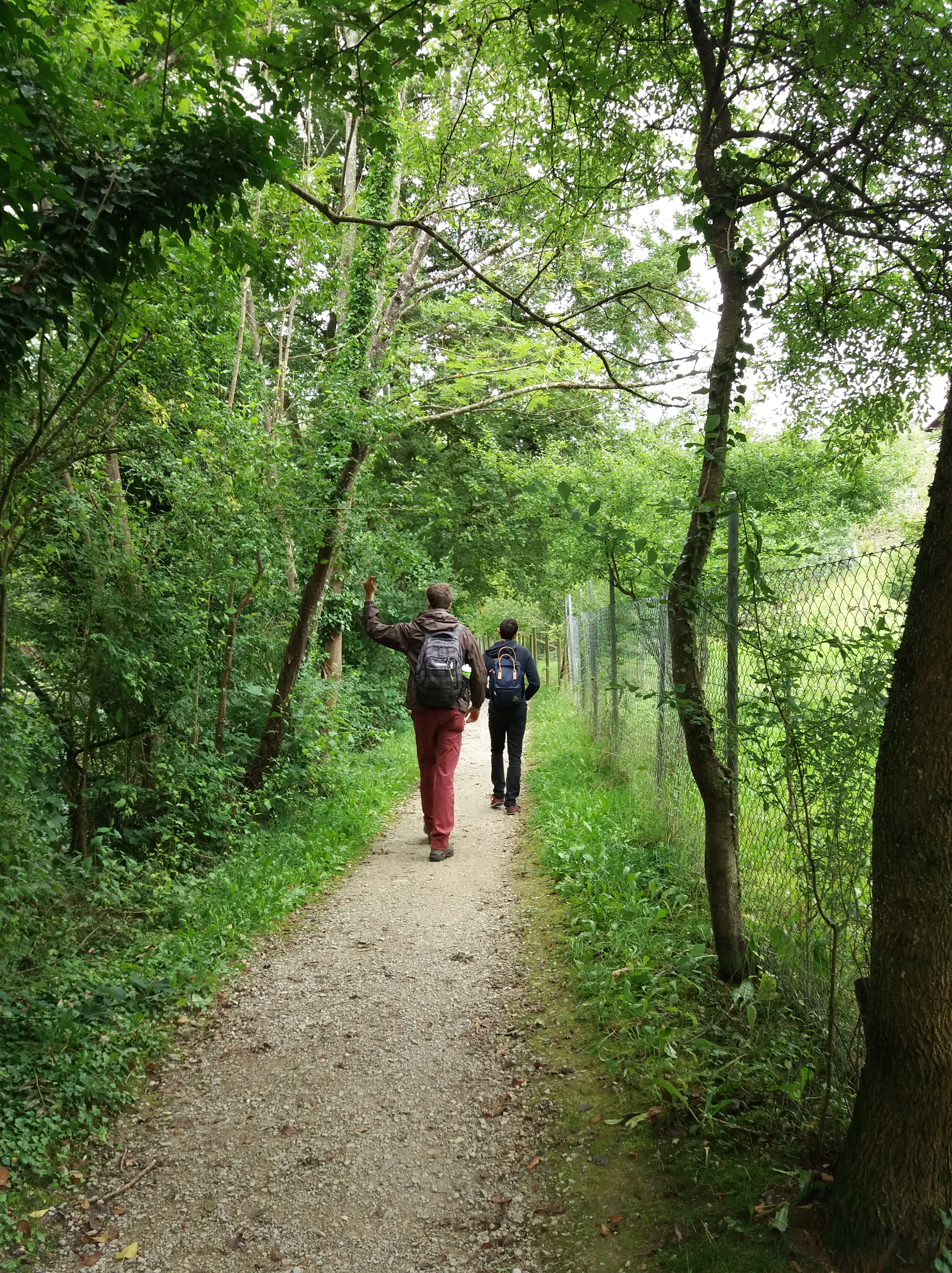
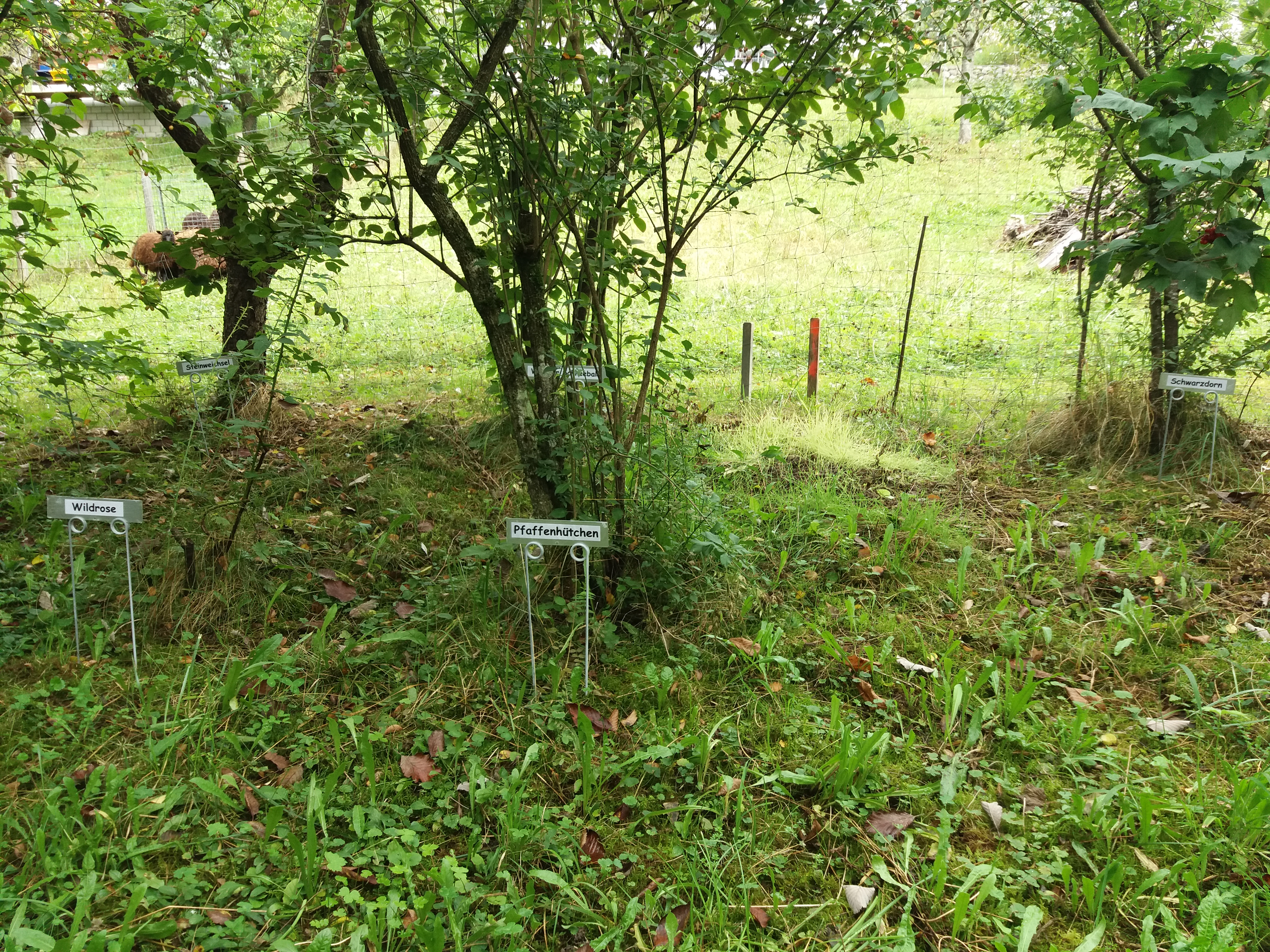
Nuestros ojos durante este tramo se desviaron del río para posarse en las plantas a los costados y en las copas de los árboles sobre nuestras cabezas.
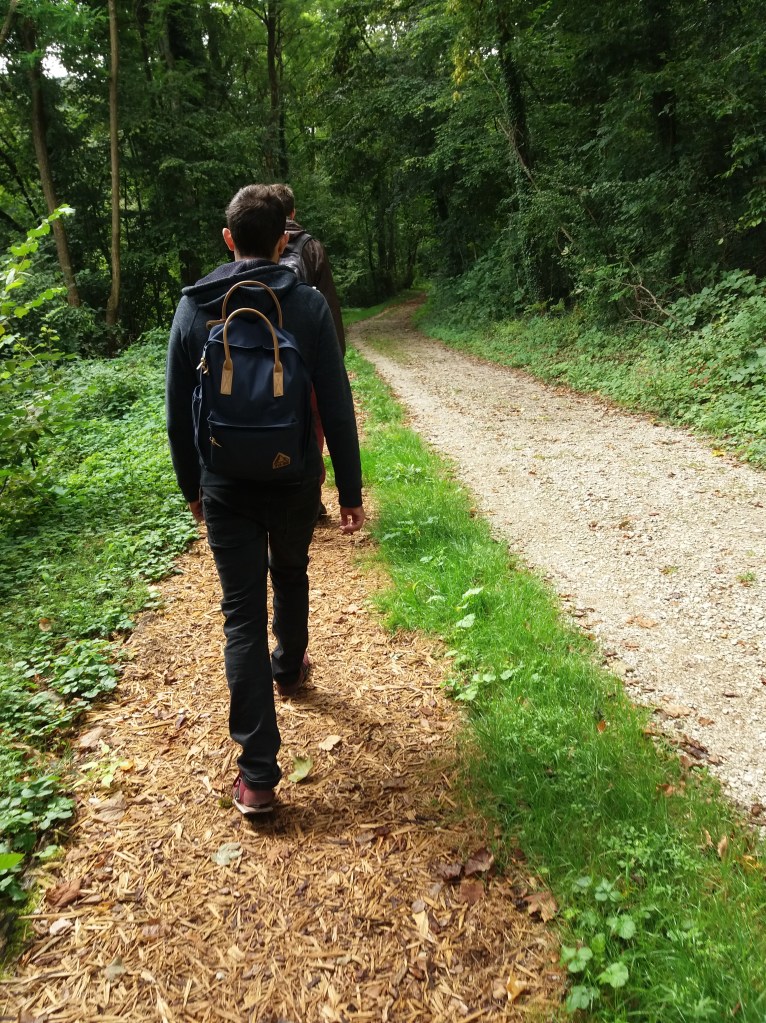
Avanzando, pusimos en práctica otro sentido cuando encontramos la “pista finlandesa”. El camino se bifurcaba pero uno de ellos era un camino especial, hecho con una técnica finlandesa que vuelve al terreno, mediante trozos de madera, acolchonado. Caminar por allí, aunque fue un breve tramo, fue un placer para los pies ya cansados en las botas y zapatillas de trekking.
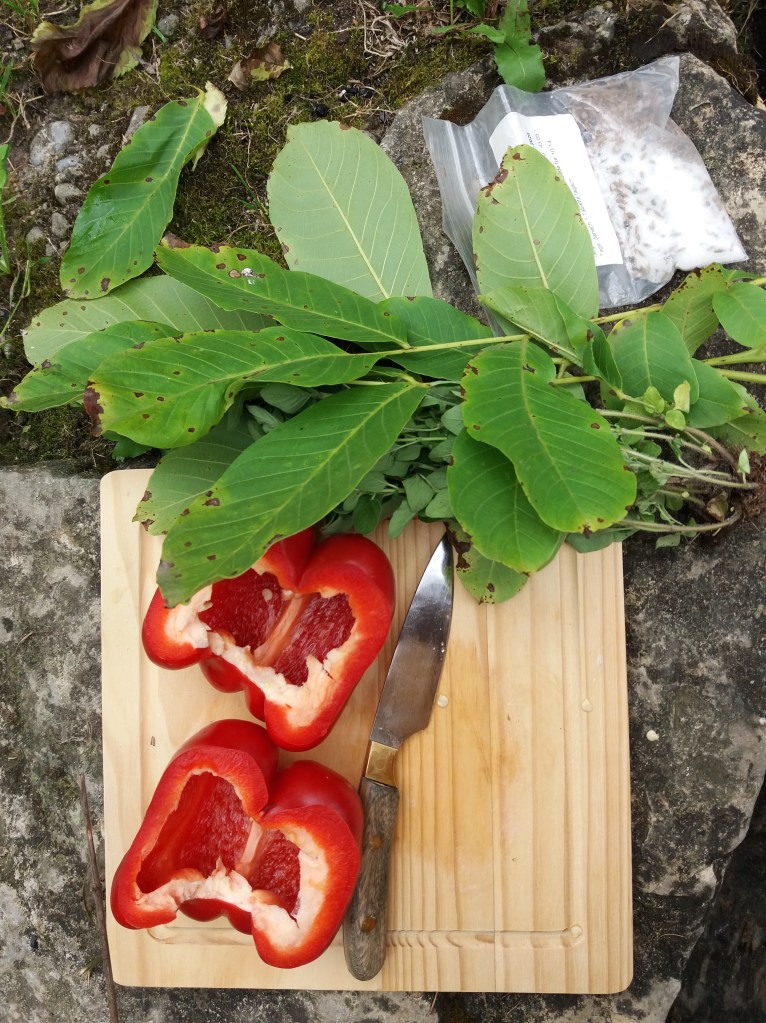
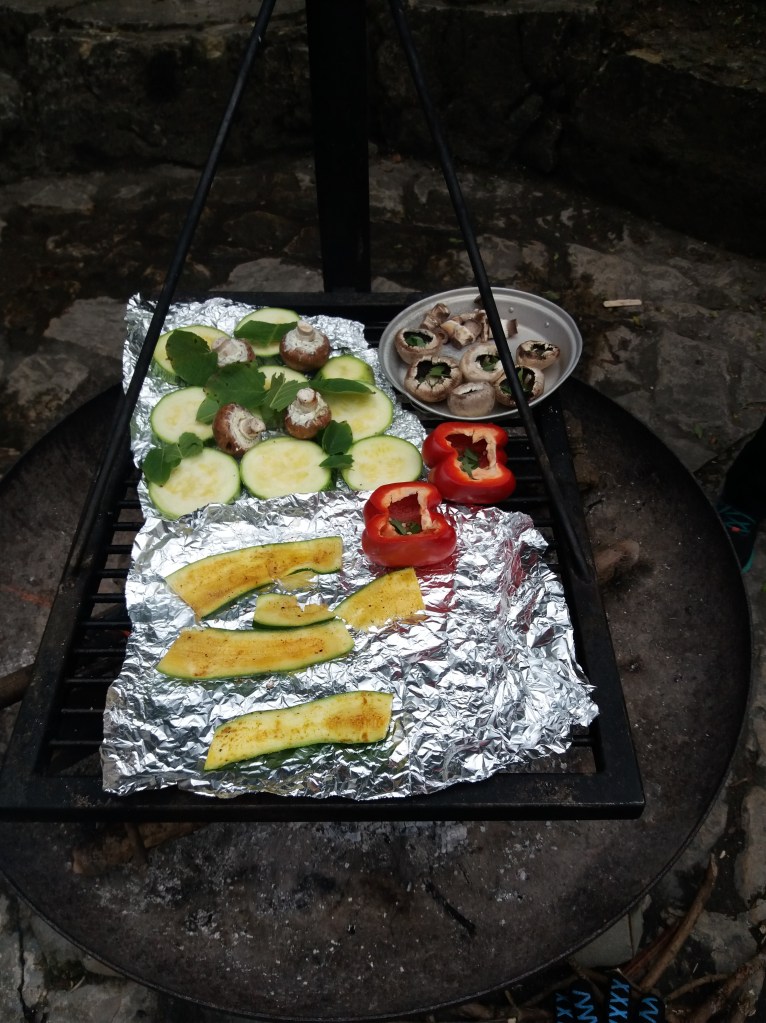
Cuando encontramos una zona donde era posible hacer fuego, nos detuvimos para cocinar y comer juntos. Juntamos leña en los alrededores y los colocamos en una parrilla. Cuando el fuego estuvo encendido, cada uno puso lo que había llevado: papas, pimientos, zapallos, champignones y queso. Disfrutamos de un momento de descanso al lado del fuego y de un sabroso almuerzo, el cual condimentamos con orégano y nogal que recogimos en la zona gracias al consejo de Paloma.
Al retomar nuestro camino, encontramos carteles con información pertenecientes al Industrie Kultur Pfad, el cual habla del pasado industrial que tiene la región en esta zona fluvial. A lo largo del siglo XIX, en las márgenes del río se instalaron fábricas, especialmente de algodón, que tuvo consecuencias como la canalización de los ríos y la creación de pueblos industriales donde vivía la mano de obra. Las fábricas dependían de los ríos como proveedores de energía. Hacia finales del siglo, las fábricas textiles fueron superadas por las industrias a gran escala. Con el cambio que se inició en los años 70 al trasladarse el énfasis al sector de los servicios, varios de los edificios de la ruta del patrimonio industrial se han destinado a nuevos usos.
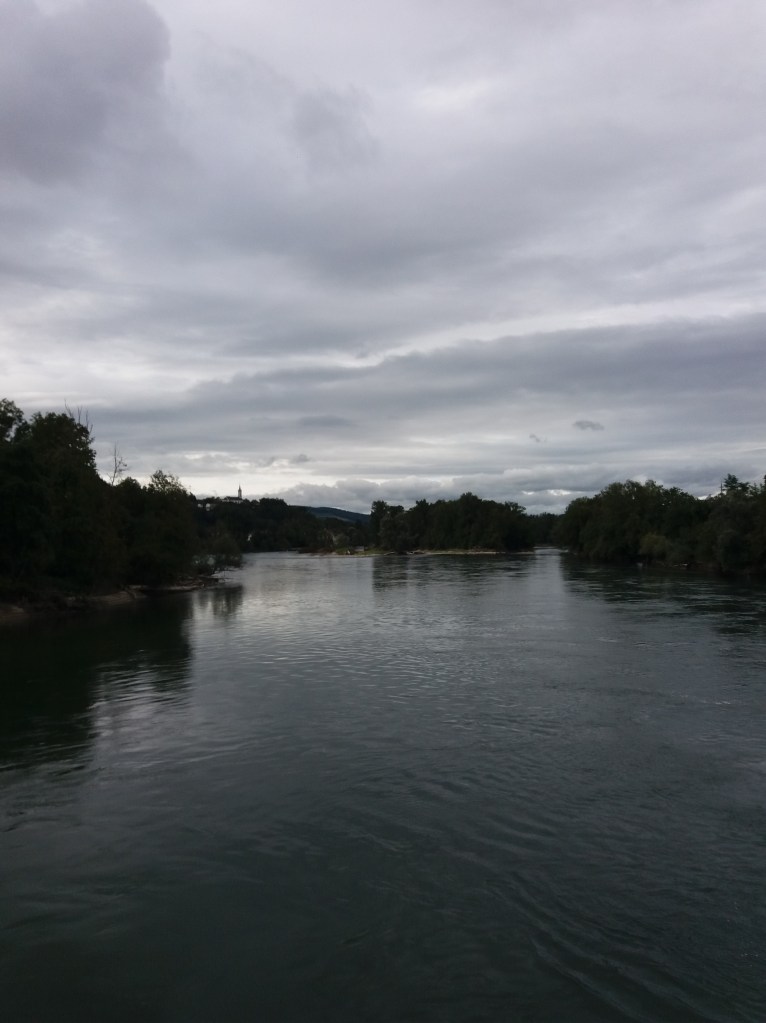
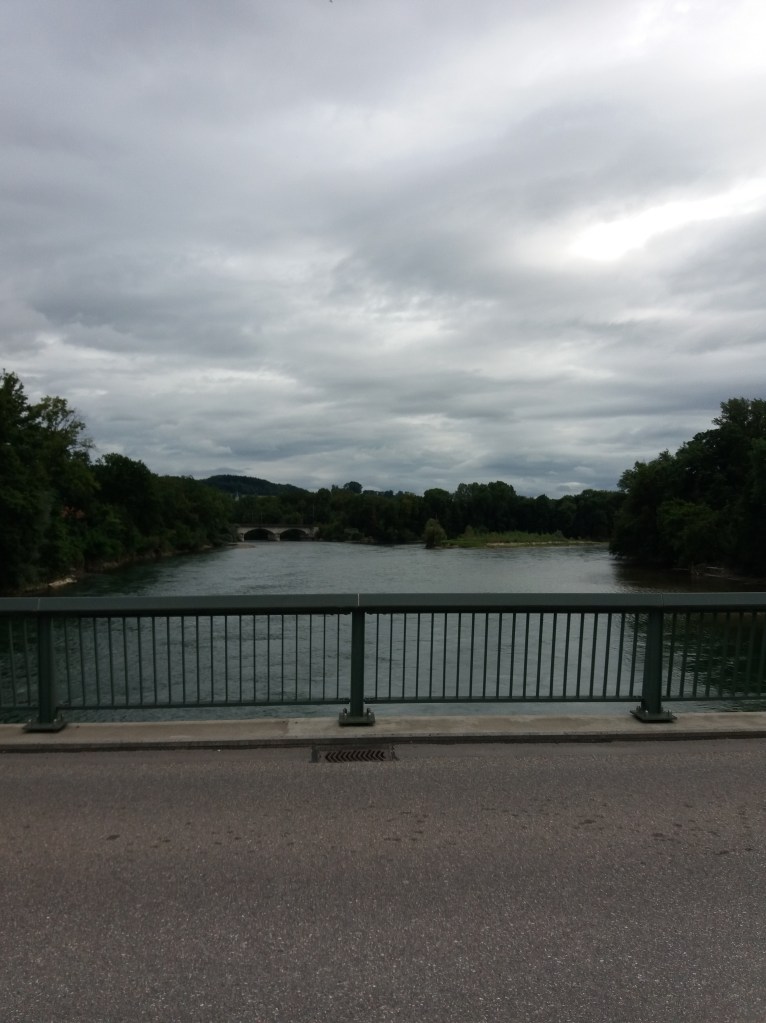
Finalmente llegamos al Wasserschloss, “castillo de agua”, allí donde el Limmat desemboca en el Aare, poco después de la desembocadura del Reuss. En el Limmatspitz, la punta del Limmat, saludamos al río que hemos ido siguiendo a lo largo de los paseos anteriores.

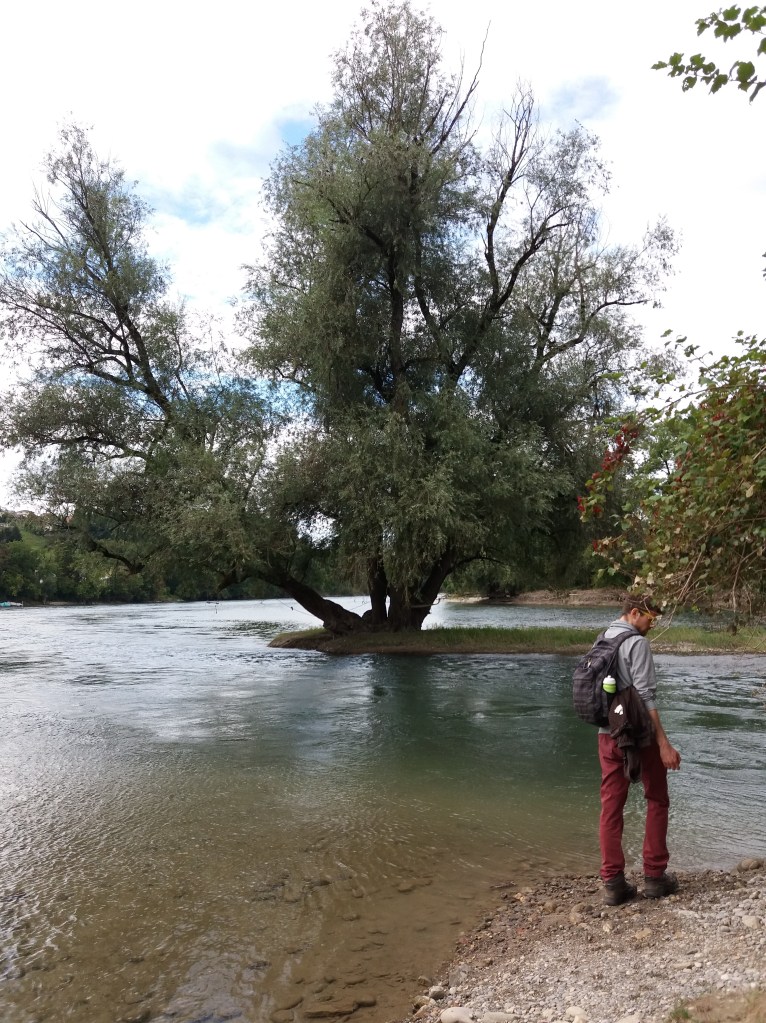
En el Wasserschloss nos sentamos a descansar, a tomar mate y a compartir la lectura de un fragmento de Un lugar llamado Antaño, escrito por Olga Tokarczuk. Una frase de esta sección que habla del párroco del pueblo que odia al Río Negro, me dejó pensando. Él dice: “Un río es simplemente un río, nada más.” Y sin embargo cuánto hemos visto en este solo río: él es fuente de vida, de energía, de empleo. En él vive fauna y flora, se asientan ciudades, crea caminos y conexiones. ¿Cuántas cosas es un río?
Sin embargo, durante esta caminata lo hemos visto menos que en las anteriores. Con Tom coincidimos que de las tres ha sido la menos fluvial. Muchas veces nos encontramos caminando en calles de casas y de campos, barrancas distantes y en el margen de carreteras. ¿Cómo será la próxima etapa que nos espera?
Nos espera seguir al Aare, río que hoy ya conocimos y que seguimos hasta nuestra parada final: Siggenthal-Würenlingen.
ENGLISH
We started the third stage where we finished the last hike: Baden. The day greeted us cloudy, with intentions of rain and yet it did not rain. Fortunately, the weather does not stop us.With Paloma, Nico and Tom we walked from the train station to the river, taking a public elevator that took us down from the upper to the lower part of the city. Once on the riverbank, we walked commenting on the past splendor of Baden during the time of the thermal baths tourism. There, in its origins, the first Roman settlements found a hot spring and founded the village Aquae Helveticae.
The thermal baths brought a strong growth of the city during the 19th century with the boom of bath and spa tourism. Hotels and infrastructures were built and Switzerland’s first railway line connecting Zürich and Baden was created in 1847. The city was visited by personalities such as Goethe, Nietzsche and Thomas Mann. Paloma told us that some of them have their statues in the city or give names to streets.
Walking north, we saw some striking hotels and came across small public areas to soak our feet in the Baden waters: an open-air bath and a bench, where Tom and I tried soaking our feet.
Continuing on our way, we saw from the opposite shore the thermal baths being built by architect Mario Botta. We were not happy with the building, and instead of stopping to contemplate it, we noticed some kayakers paddling in a fast, rocky area of the river. Waving to them, we left the city behind.
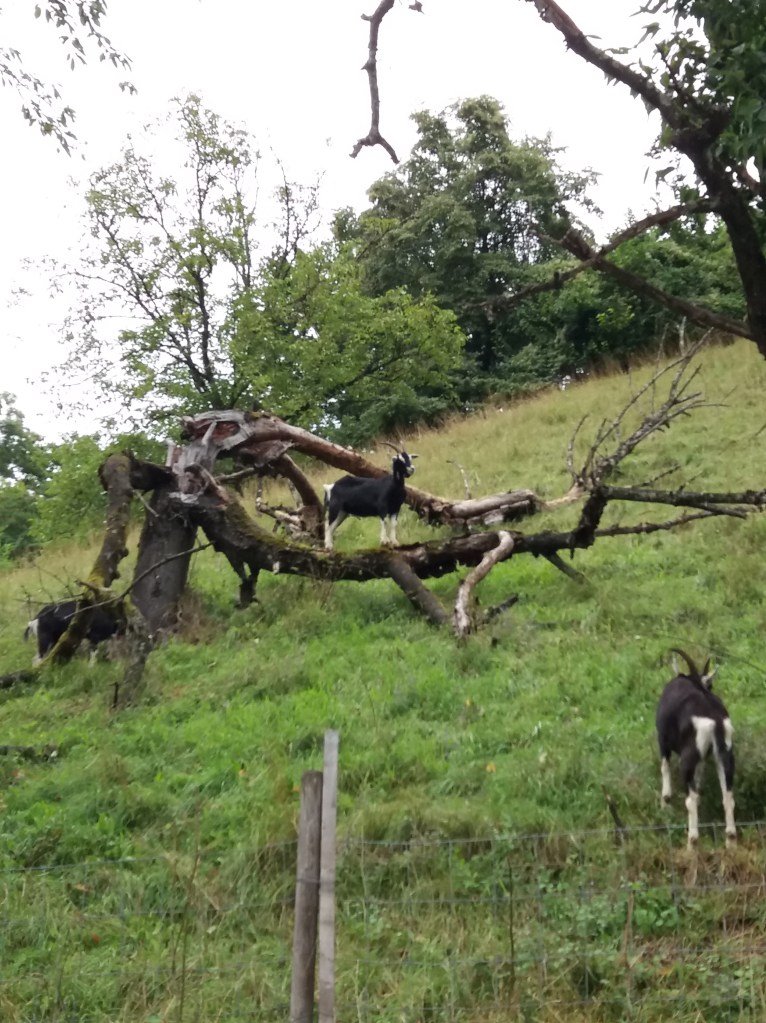
From then on, we crossed streets of single-family houses, losing the river in sections, until we reached it and were able to follow it for a long stretch. Moving along paths between the river and private gardens, we began a «tasting walk» or «gardening tasting» in which Paloma pointed out the edible fruits and plants that we came across: plums, blackberries, edible flowers such as Oenothera biennis, some sweeter, others bitter.
Our eyes during this stretch turned away from the river to look at the plants on the sides and the treetops above our heads.
Moving on, we put another sense into practice when we came upon the «Finnish track». The path forked but one of them was a special path, made with a Finnish technique that turns the ground, by means of pieces of wood, cushioned. Walking there, although it was a short stretch, was a pleasure for the already tired feet in the boots and trekking shoes.
When we found an area where it was possible to build a fire, we stopped to cook and eat together. We gathered firewood in the surrounding area and placed it on a grill. When the fire was lit, everyone put what they had brought: potatoes, peppers, squash, mushrooms and cheese. We enjoyed a moment of rest by the fire and a tasty lunch, which we seasoned with oregano and walnut that we picked up in the area thanks to Paloma’s advice.
As we resumed our walk, we found signs with information pertaining to the Industrie Kultur Pfad, which speaks of the industrial past that the region has in this river area. Throughout the 19th century, factories were set up along the riverbanks, especially cotton factories, which had consequences such as the canalization of the rivers and the creation of industrial villages where the labor force lived. The factories depended on the rivers as energy suppliers. Towards the end of the century, textile mills were overtaken by large-scale industries. With the change that began in the 1970s as the emphasis shifted to the service sector, several of the buildings along the industrial heritage route have been put to new uses.
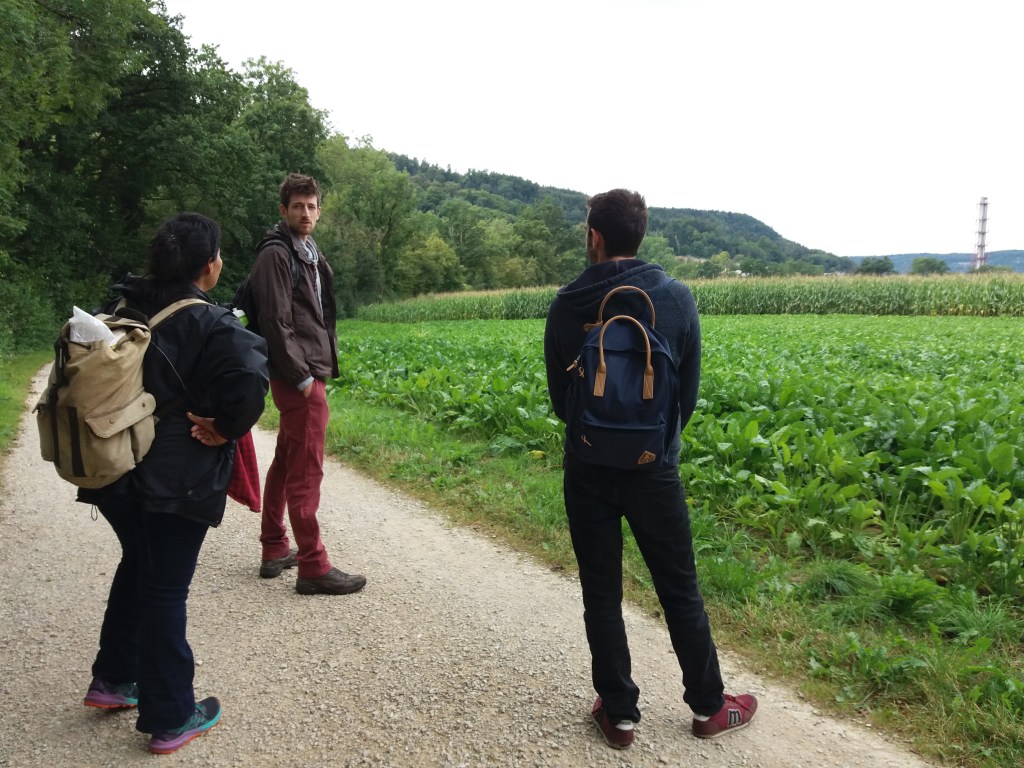

Finally we come to the Wasserschloss, «water castle,» where the Limmat flows into the Aare, shortly after the mouth of the Reuss. At the Limmatspitz, the tip of the Limmat, we greet the river we have been following along the previous walks.
At the Wasserschloss we sat down to rest, drink mate and share the reading of an excerpt from Primeval and other times, written by Olga Tokarczuk. One sentence in this section about the town’s parish priest who hates the Black River got me thinking. He says, «A river is simply a river, nothing more.» And yet how much we have seen in this one river: it is a source of life, of energy, of employment. Wildlife lives in it, cities settle in it, it creates roads and connections. How many things is a river?
However, during this walk we have seen less of it than in the previous ones. Tom and I agreed that of the three, it was the least fluvial. Many times we found ourselves walking in streets of houses and fields, distant ravines and on the side of roads. What will the next stage be like that awaits us?
We will follow the Aare, a river that we already knew today and that we follow to our final stop: Siggenthal-Würenlingen.

 Despaseando
Deja un comentario