Tramo IV / Part IV: Siggenthal-Würenlingen – Döttingen 9,1 km
(ENGLISH below)
Nos dirigimos al punto de partida de esta parte del recorrido: Siggenthal-Würenlingen. Como somos solo dos los que salimos desde Zürich, decidimos hacerlo a la hora que nos quede mejor. Nos retrasamos entonces, para una partida con calma.
El camino nos recibe soleado y fresco. No hay nadie cerca de la estación, perdida entre calles vacías en un entorno fabril. Comenzamos así un paseo en el que nos cruzaremos con poca gente.
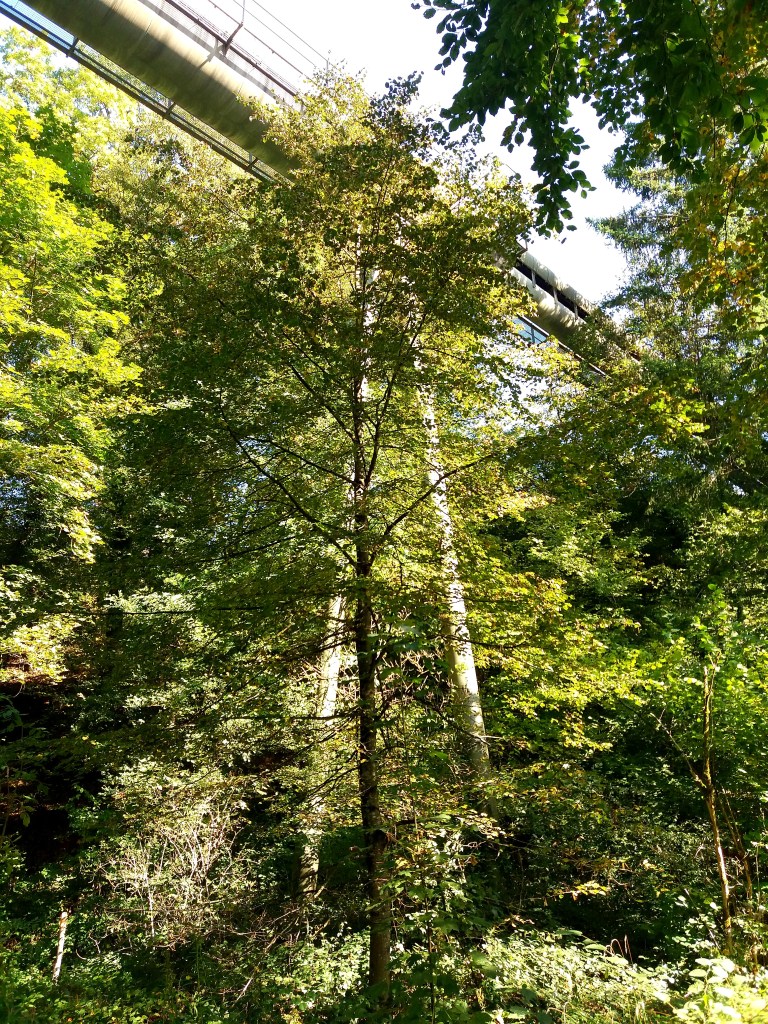
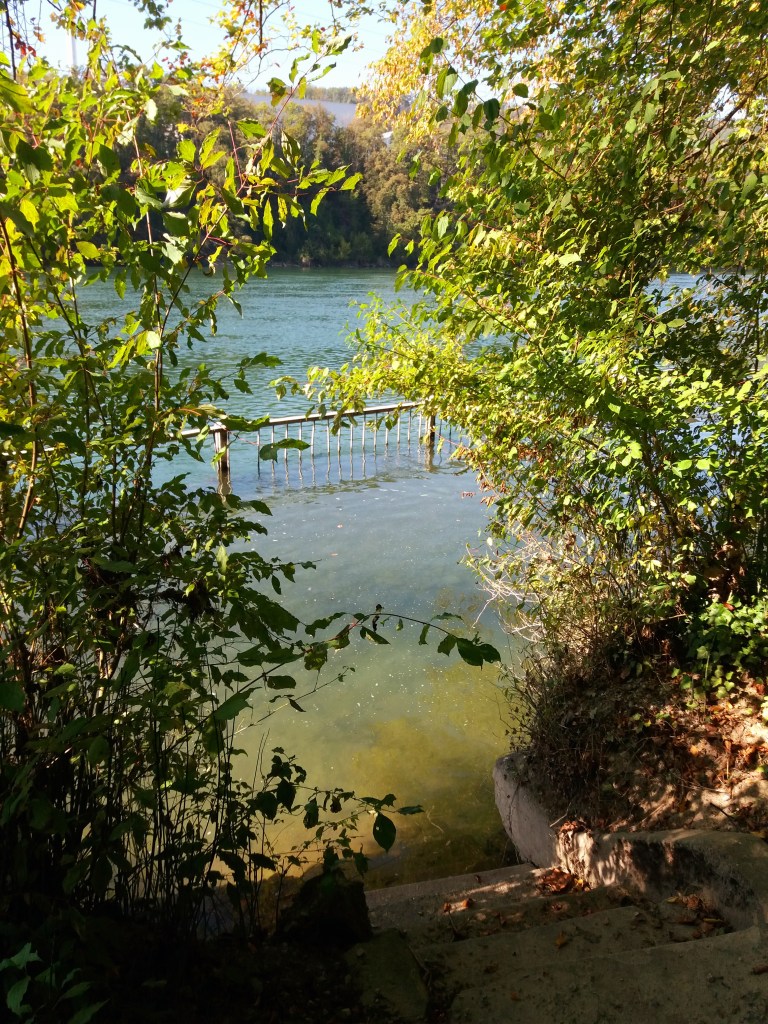
Por calles que son carreteras, llegamos al inicio de un sendero que nos adentra en un bosque. Allí, vamos intuyendo la ruta para llegar al Aare, el río al que seguimos hoy. En este caminar intuitivo, nos cruzamos con un puente aéreo que adivinamos traslada material (más tarde Paloma y Raco nos confirmarán que transporta piedras desde la montaña del otro lado del río. Este puente nos adentra en un mood que nos acompañará durante el resto del camino: la sensación de caminar en un entorno distópico. Influirá en este mood la casi total ausencia de personas en los lugares por los que caminamos así como por los lugares que vemos en la otra orilla del río, pero también las infraestructuras que nos encontramos, como el puente de rocas y una piscina dentro del río en la cual se evidencia el paso del tiempo y el abandono.
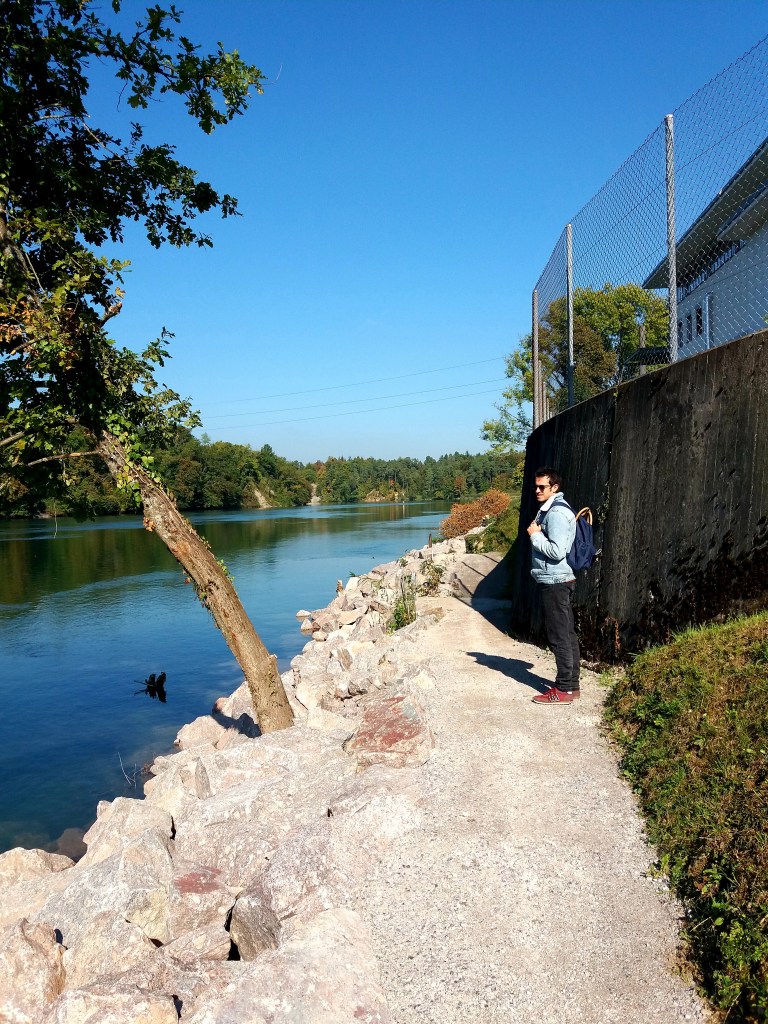
Al seguir camino y cruzarnos con las instalaciones del Psi Forum, nos encontramos con un camino con dotaciones donadas por los investigadores del Paul Scherrer Institute, como una zona de piedras blancas-rosáceas que decora parte del trayecto, volviendo extraña, lunar, esa margen del río por un breve tramo. Según la web, el Paul Scherrer Institute PSI: “is the largest research institute for natural and engineering sciences in Switzerland, conducting cutting-edge research in three main fields: matter and materials, energy and the environment and human health.”
Cerca de sus inmediaciones hay una parte del sendero vallado sin explicación. Como google maps no nos indica otra forma posible de seguir caminando cerca del río, y vemos que algunas personas atraviesan las barreras y caminan por allí, decidimos sortearlas y seguir caminando junto al agua, fantaseando con que estas barreras indican peligro de radioactividad por los experimentos del Instituto y que por haberlas traspasado nos pondrían en cuarentena, si es que nos encontraban.
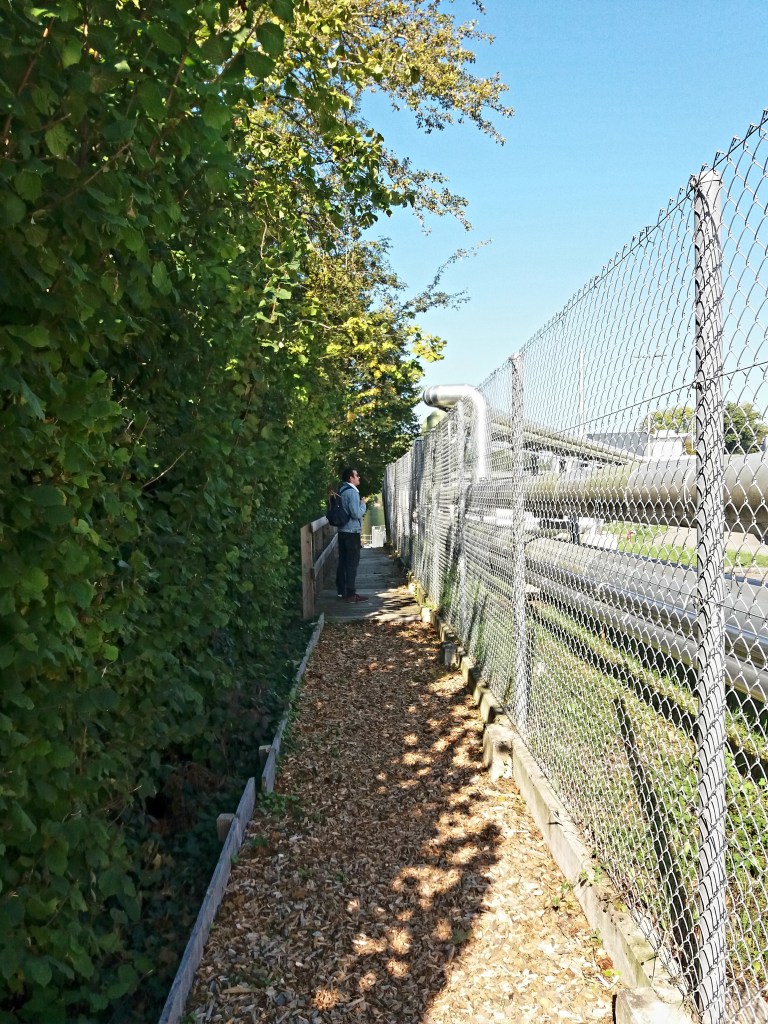
Estas ideas no solo las trae nuestro mood distópico, sino también la cercanía con Kernkraftwerk Beznau, la central nuclear de energía Beznau. Esta central nuclear opera desde 1969 en una isla artificial del río Aare y produce energía. Cuando la planta fue construida no hubo una importante oposición a la energía nuclear, pero años después la central fue el punto de manifestaciones de activistas anti-nucleares. Es por eso que hay tantas vallas, cables y puertas, nos explicaron Paloma y Raco, con quienes nos encontramos por allí junto con su perro.
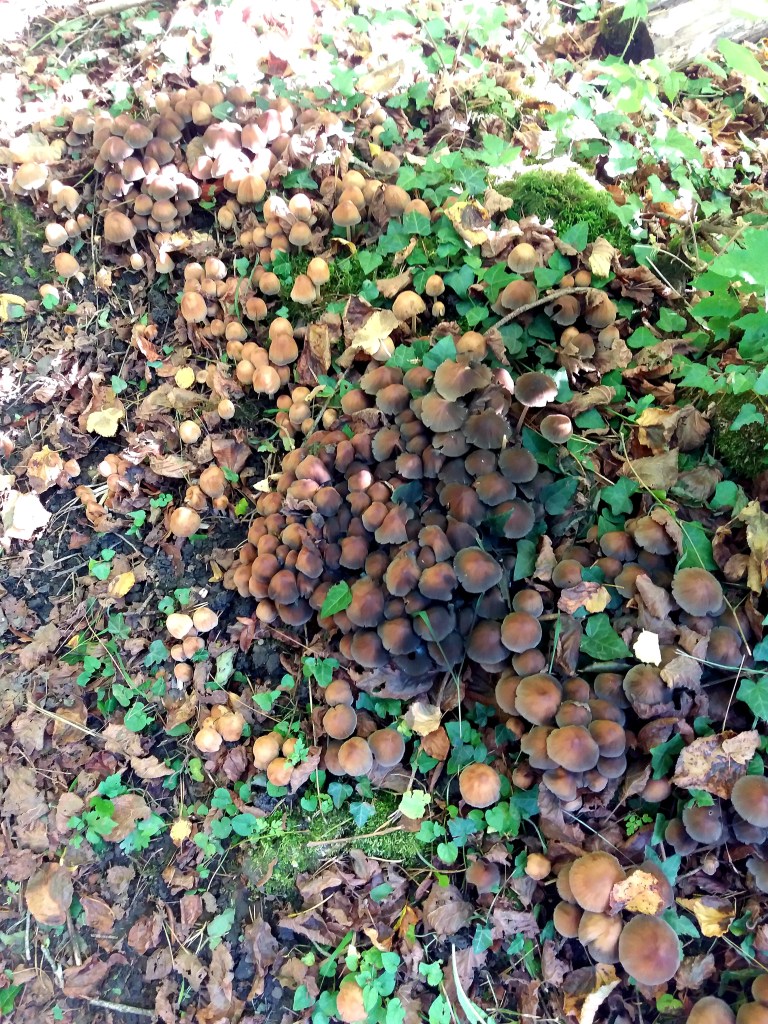
Caminando a partir de entonces con ellos, conversamos sobre hongos radioactivos, hongos que crecen entre desechos humanos y la película Soylent Green en la que el alimento de ese mundo distópico se produce con los cuerpos de las personas que mueren. Paloma nos trasladó algunas de sus investigaciones artísticas actuales que cuestionan la jerarquía existente entre humanos por sobre el resto de los seres vivos, en la que en torno a los desechos humanos hay tabúes pero no así con respecto a los animales y plantas. ¿Qué podemos hacer con la basura que generamos? Hablamos tanto de la basura externa como la interna que produce nuestro cuerpo.

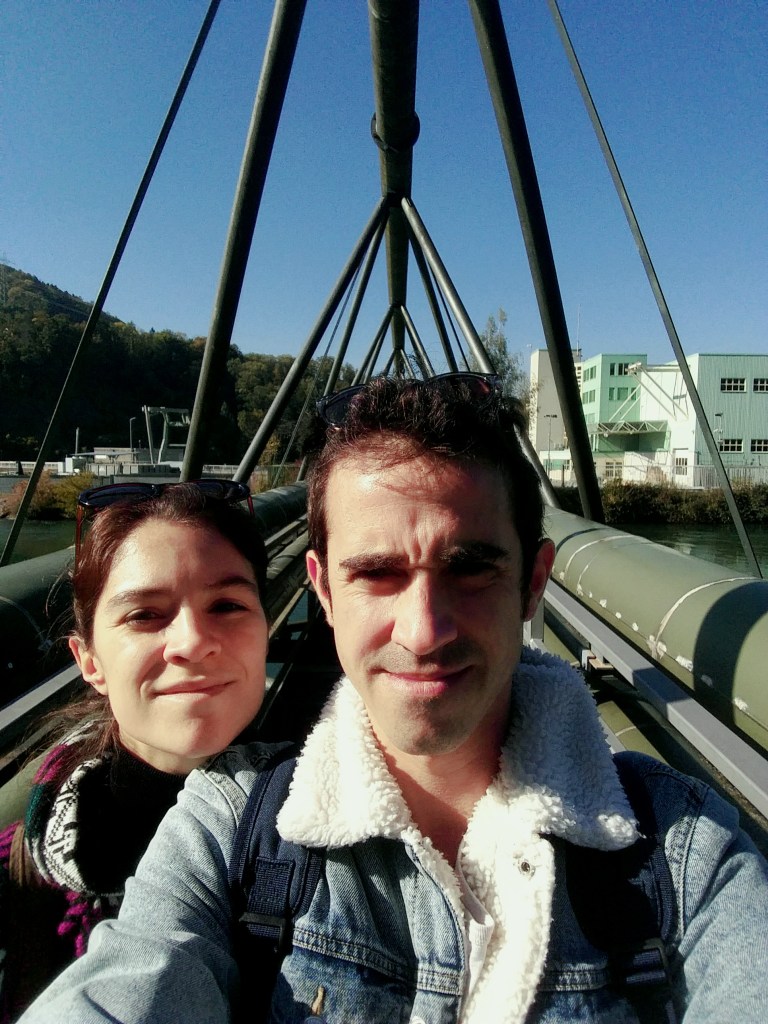
Definitivamente fue un paseo distópico que nos permitió explorar escenarios posibles así como plantearnos preguntas que nos acompañan en los tiempos en que vivimos. Y todo caminando a lo largo del río Aar, preguntándonos por la procedencia de espumas extrañas en su superficie, por lo que esconden sus aguas y no podemos ver. Desde fuera, el paisaje es bello, desolado pero bello. ¿Qué no vemos del río y del ecosistema en torno a él?
Llegamos a Döttingen y allí compartimos una pizza que comimos al sol junto al Aare, antes de regresar a nuestras casas.

ENGLISH
We head to the starting point of this part of the tour: Siggenthal-Würenlingen. As there are only two of us leaving from Zürich, we decide to do it at the time that suits us best. We delay then, for a calm departure.
The road greets us sunny and cool. There is no one near the station, lost between empty streets in a factory environment. We thus begin a walk in which we will cross with few people.
Through streets that are roads, we reach the beginning of a path that takes us into a forest. There, we intuit the route to reach the Aare, the river we follow today. In this intuitive walk, we come across an aerial bridge that we guess is carrying material (later Paloma and Raco will confirm that it is carrying stones from the mountain on the other side of the river. This bridge takes us into a mood that will accompany us for the rest of the way: the feeling of walking in a dystopian environment. This mood will be influenced by the almost total absence of people in the places where we walk as well as by the places we see on the other side of the river, but also by the infrastructure we find, such as the rock bridge and a pool in the river in which the passage of time and abandonment are evident.
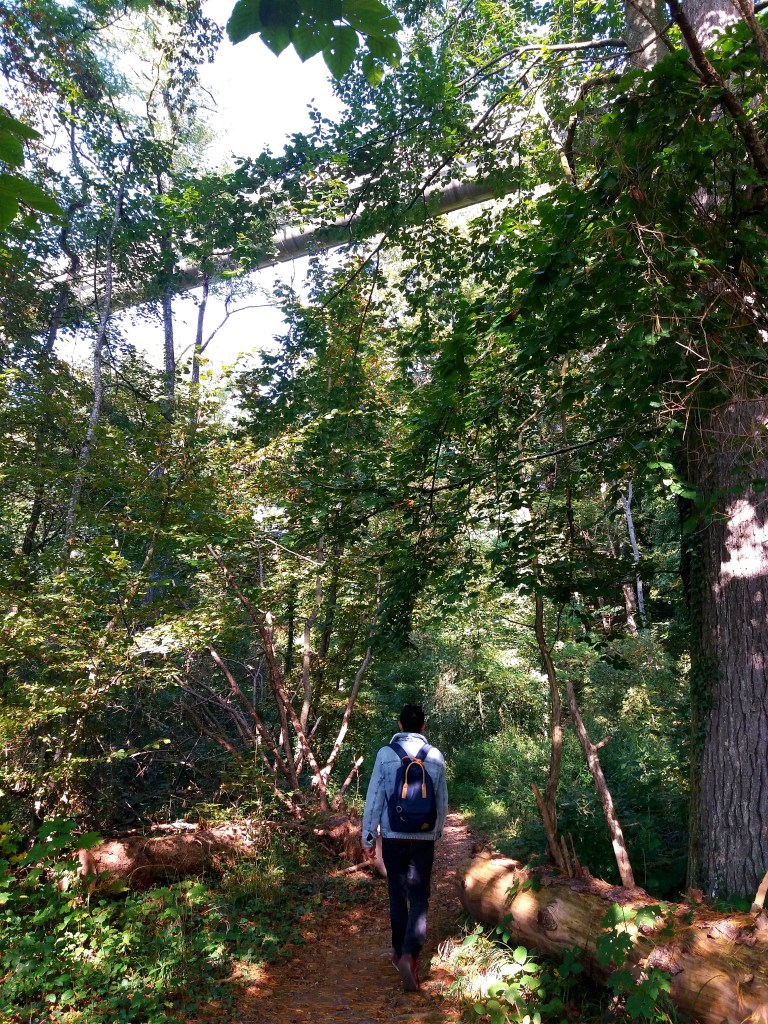

As we continue on our way and cross the Psi Forum facilities, we find a path with endowments donated by the researchers of the Paul Scherrer Institute, such as an area of pinkish-white stones that decorates part of the path, making this river bank strange, lunar, for a short stretch. According to the website, the Paul Scherrer Institute PSI: «is the largest research institute for natural and engineering sciences in Switzerland, conducting cutting-edge research in three main fields: matter and materials, energy and the environment and human health.»
Near its vicinity there is a part of the trail fenced off without explanation. As google maps does not show us any other possible way to continue walking near the river, and we see that some people cross the barriers and walk there, we decide to circumvent them and continue walking along the water, fantasizing that these barriers indicate danger of radioactivity by the Institute’s experiments and that for having crossed them we would be quarantined, if we were found.
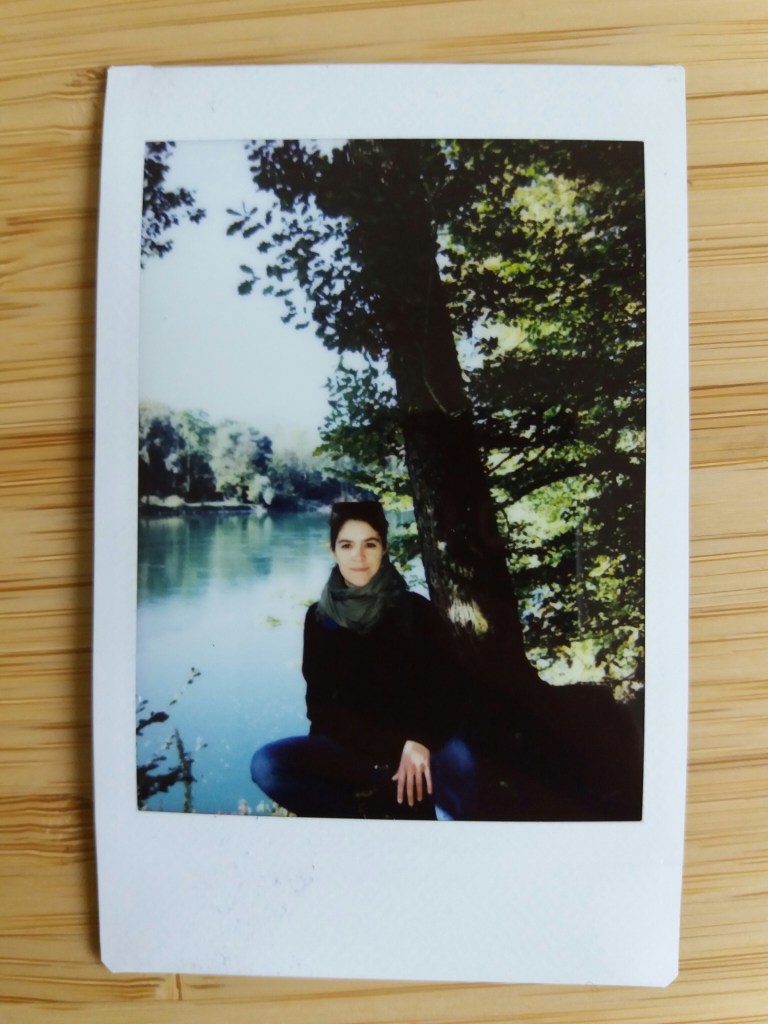

These ideas are brought not only by our dystopian mood, but also by the proximity to Kernkraftwerk Beznau, the Beznau nuclear power plant. This nuclear power plant has been operating since 1969 on an artificial island in the river Aare and produces energy. When the plant was built there was no major opposition to nuclear power, but years later the plant was the point of demonstrations by anti-nuclear activists. That’s why there are so many fences, cables and gates, explained Paloma and Raco, whom we met along with their dog.
Walking thereafter with them, we talked about radioactive mushrooms, mushrooms growing among human waste and the movie Soylent Green in which the food of that dystopian world is produced with the bodies of people who die. Paloma shared with us some of her current artistic investigations that question the existing hierarchy between humans over the rest of living beings, in which there are taboos around human waste, but not so respect to animals and plants. What can we do with the garbage we generate? We talked about both the external waste and the internal waste that our body produces.

It was definitely a dystopian walk that allowed us to explore possible scenarios as well as to ask ourselves questions that accompany us in the times in which we live. And all walking along the Aare River, wondering about the origin of strange bubbles on its surface, about what its waters hide and we cannot see. From the outside, the landscape is beautiful, desolate but beautiful. What don’t we see of the river and the ecosystem around it?
We arrived in Döttingen and there we shared a pizza that we ate in the sun by the Aare, before returning to our homes.


 Despaseando
Muy bueno Agus!!🤗
Me gustaLe gusta a 1 persona