Tramo V / Part V: Döttingen – Koblenz 6,9 km
(ENGLISH below)
Antes de empezar, debo aclarar que con el registro de este paseo fui muy desprolija. El paseo lo hicimos en marzo del 2022. Hoy escribo en un día de julio del 2023. El tiempo pasó sin que hiciera este registro por lo que hoy, cuando finalmente me propongo hacerlo, ya no será ni con suerte tan fiel ni cercano como los otros registros, sino más bien un «me acuerdo de».
Empecemos entonces. Me acuerdo de que a este paseo vinieron Paloma, Raco, su perro y Gabriela, una amiga artista de Paloma que vive en Basel y quien, como ella, también basa su investigación en el alimento.

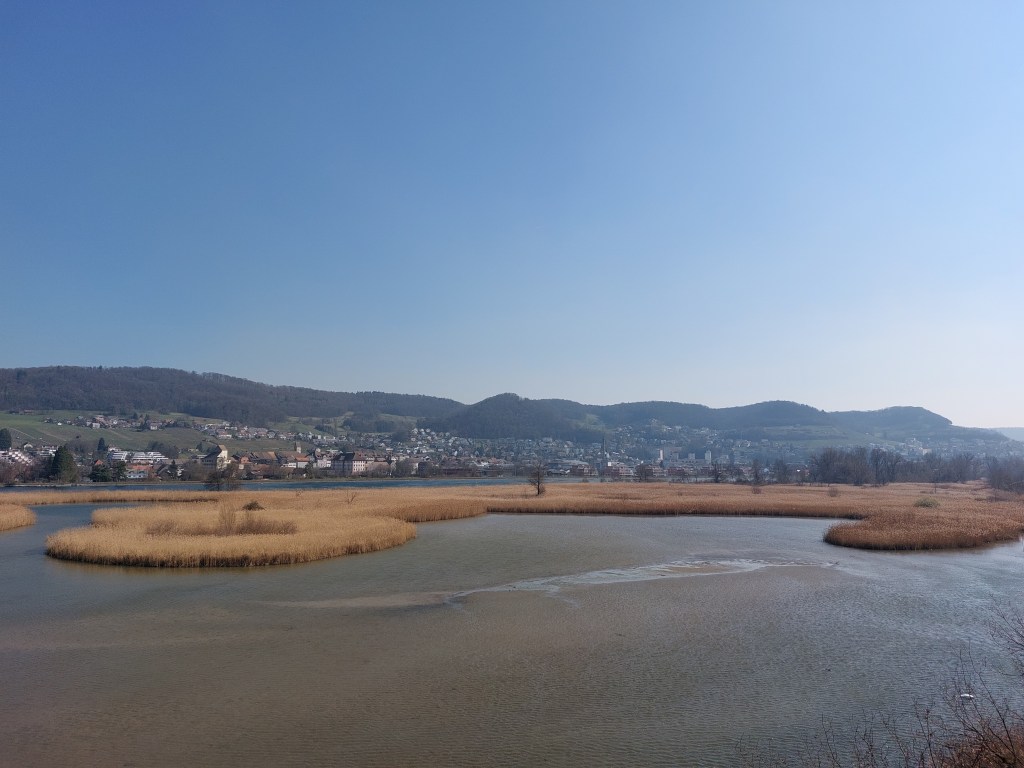
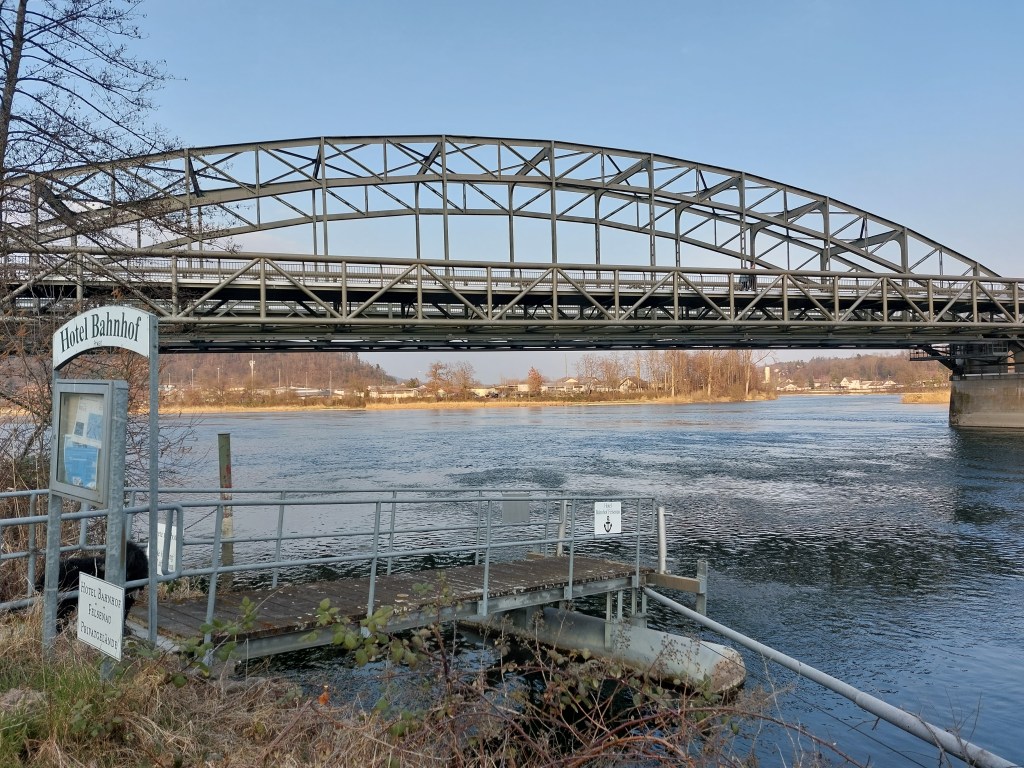
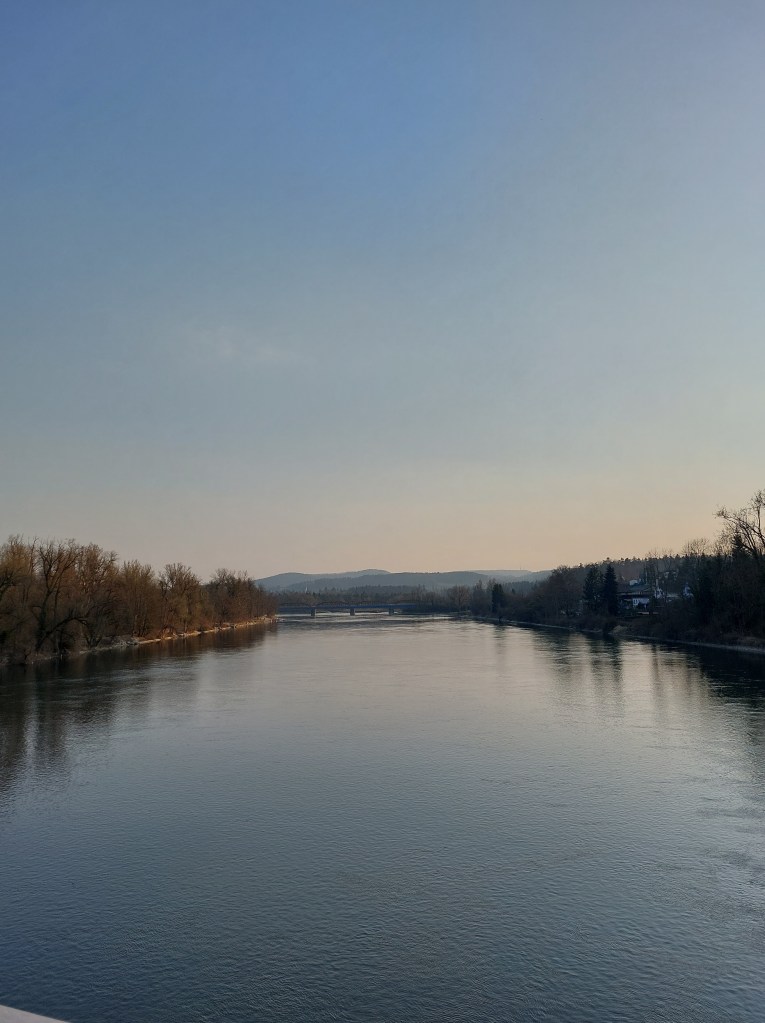
Partimos de Döttingen donde compramos algo para desayunar mientras iniciamos nuestra caminata a lo largo del Aare. Apenas iniciada, nos encontramos con estructuras de madera para el avistaje de aves, como el martín pescador, o insectos como libélulas y mariposas. Es que allí, donde el río se vuelve embalse, está el BirdLife-Naturzentrum Klingnauer Stausee. Según explica su web, hasta mediados del siglo XIX, el Aare fluía libremente por el valle inferior del Aare, inundando periódicamente grandes zonas y remodelando continuamente el paisaje, es decir, lo que hace un río de forma natural. Era uno de los mayores paisajes de llanura aluvial de Suiza, con una gran biodiversidad; bisontes, nutrias y salmones eran nativos de la zona. Para evitar que los pueblos se inunden y utilizar el terreno aluvial, el Aare fue enderezado hacia 1900, convirtiéndose en un canal estrecho y recto, historia por nosotros ya conocida. En consecuencia, el hábitat se alteró y disminuyó la biodiversidad. Posteriormente, en la década de los ’30, se construyó cerca de Klingnau la central eléctrica del Aare. El Aare fue represado, el nivel del agua subió varios metros y el río se convirtió en un embalse. Esto destruyó más restos de la llanura aluvial original pero, al mismo tiempo, el embalse proporcionó un nuevo hábitat para las aves acuáticas. En las zonas poco profundas se fueron extendiendo los juncos, arbustos y árboles, hasta formar las islas de juncos y el bosque aluvial de Kleindöttingen como se ve hoy. Actualmente, la superficie acuática ha vuelto a convertirse en una zona de gran valor ecológico. Sin embargo, para mantener esta diversidad a largo plazo, es necesario realizar trabajos de mantenimiento e intervenciones periódicas.
Observamos las islas de juncos amarillos desde una alta plataforma junto al río. Tienen formas redondeadas.
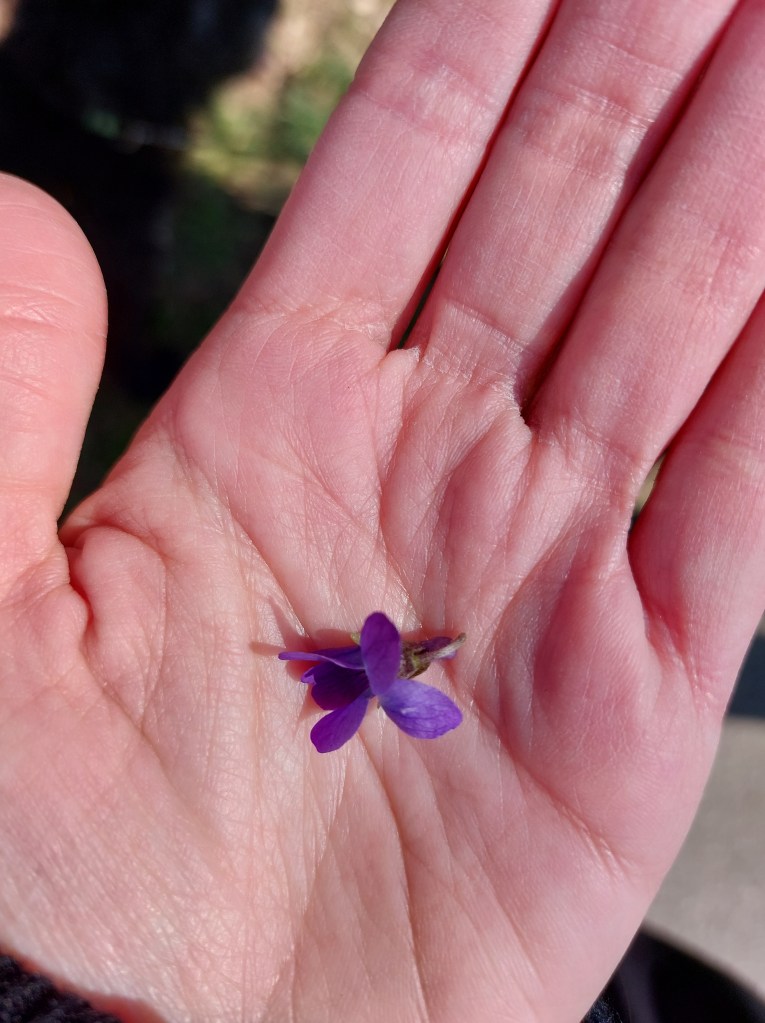
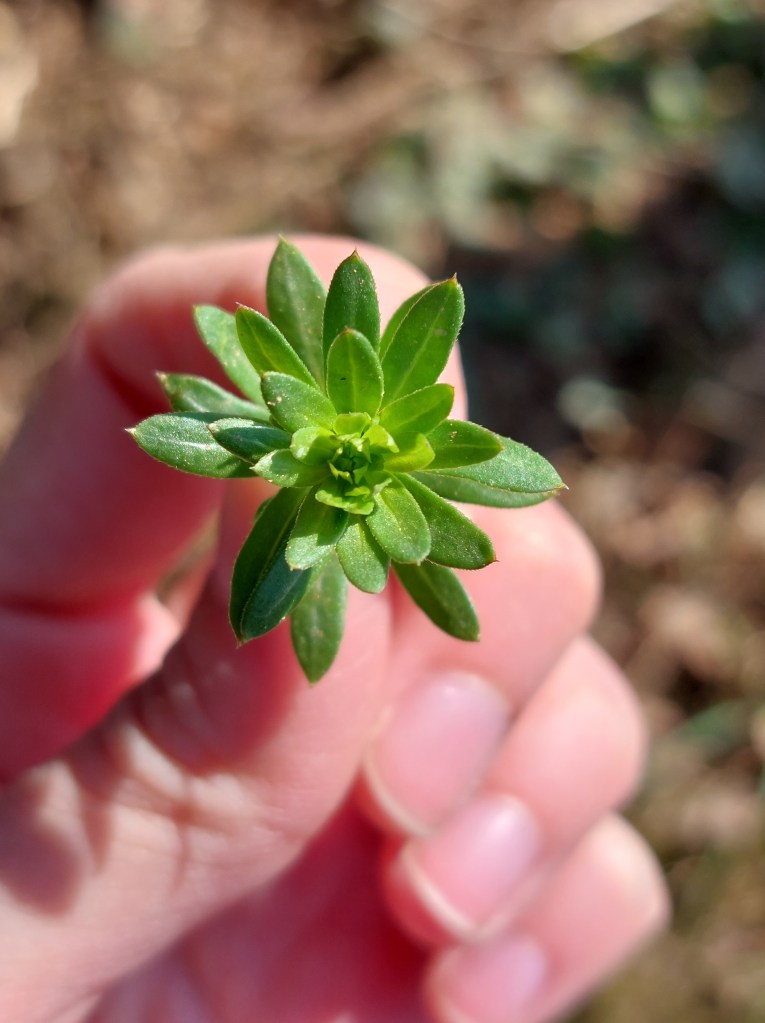
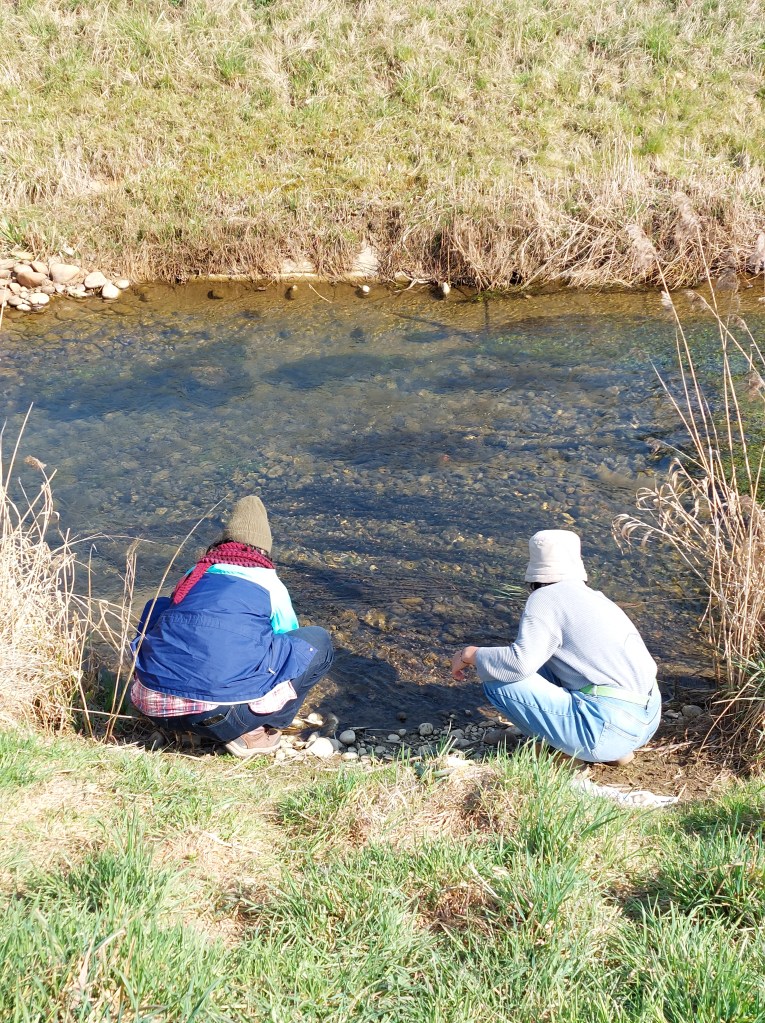
Seguimos nuestro camino por una ruta en la que a la derecha teníamos al río y a la izquierda un pequeño canal, el «Binnenkanal». Paloma se convirtió una vez más en espigadora, recolectando frutos y plantas para nuestro almuerzo. Gabriela la acompañó. De las plantas que nos mostró, hice una foto de una flor de violeta y de una hoja que parece ser de la familia de las Galium.
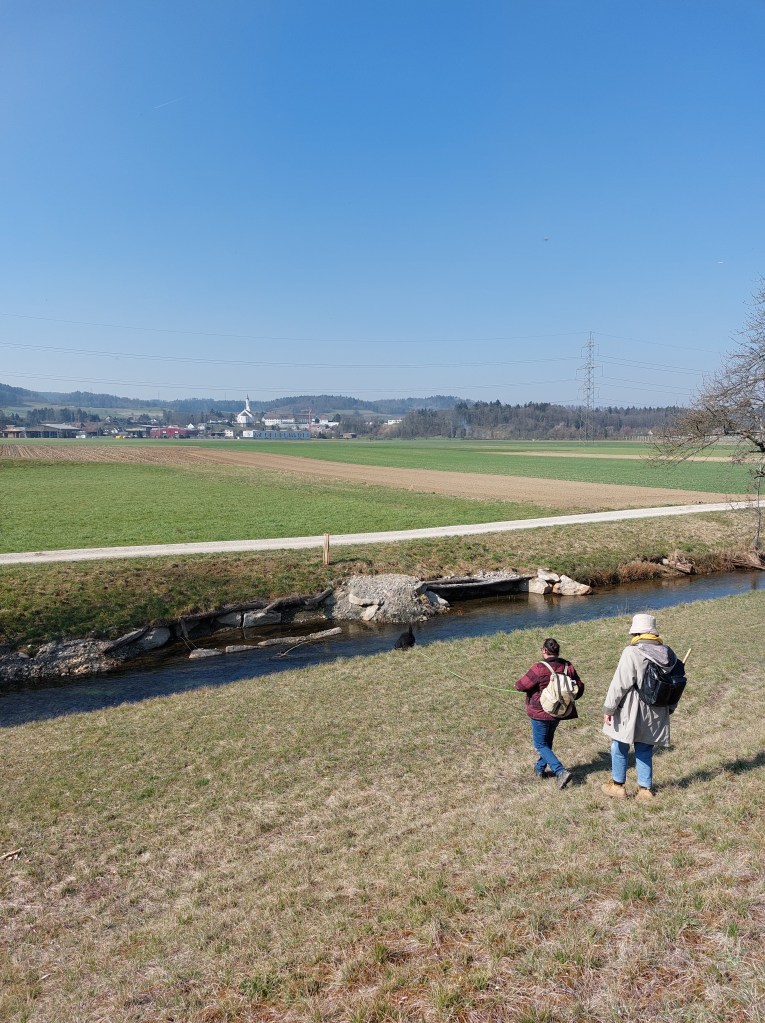
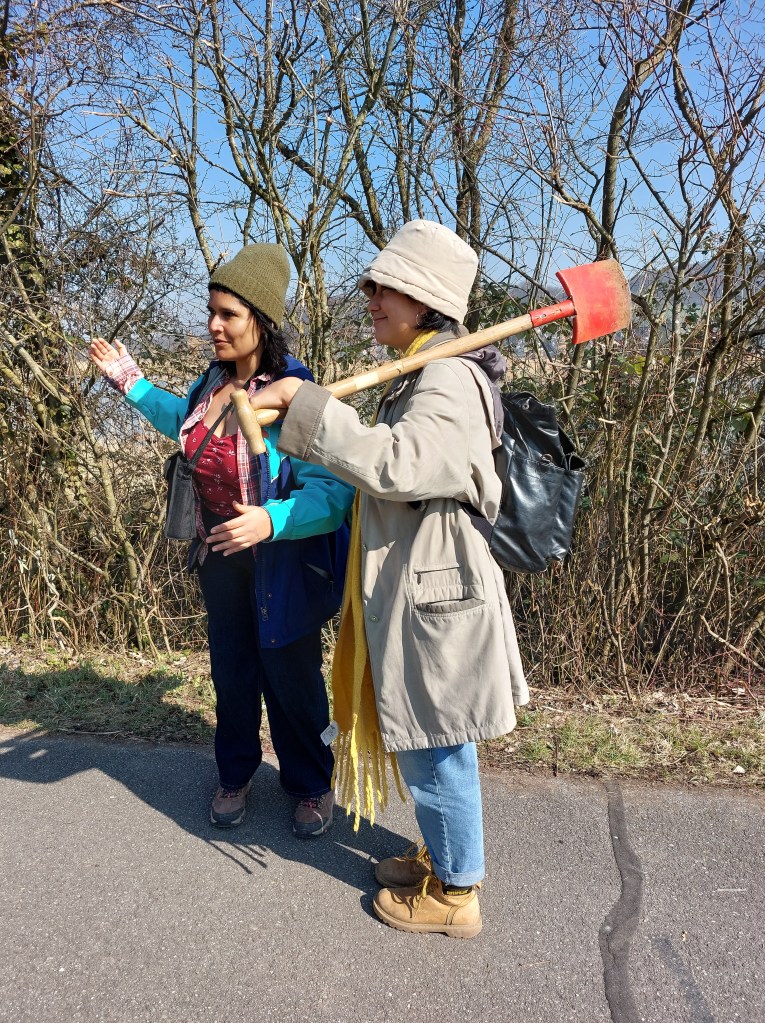
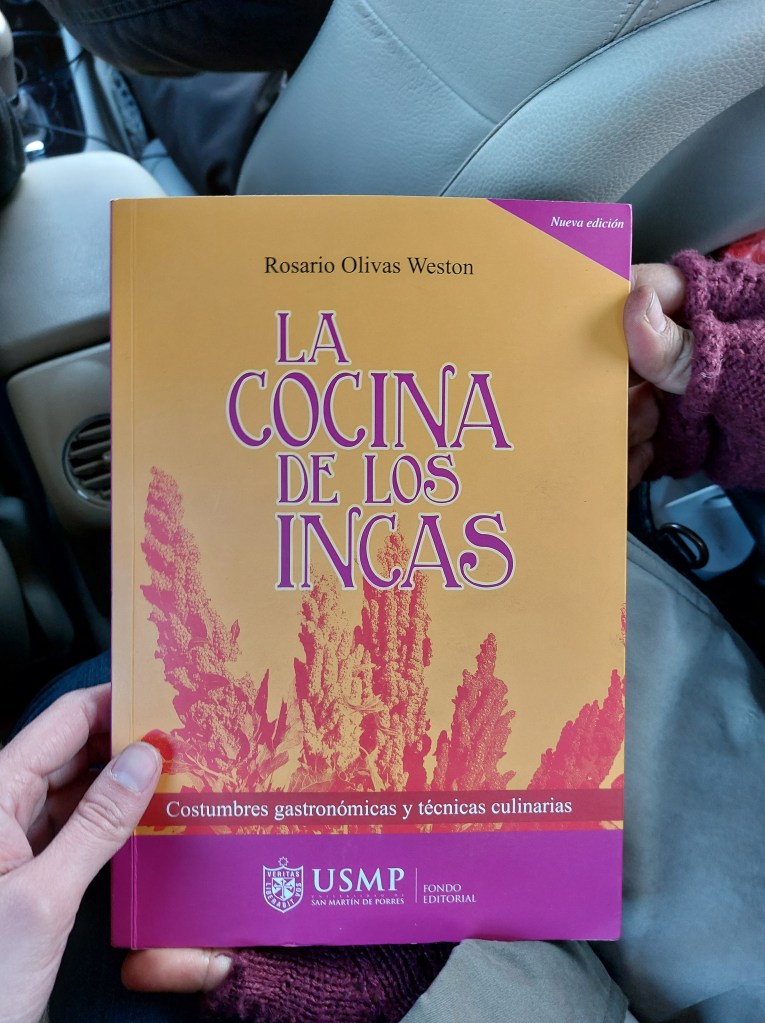
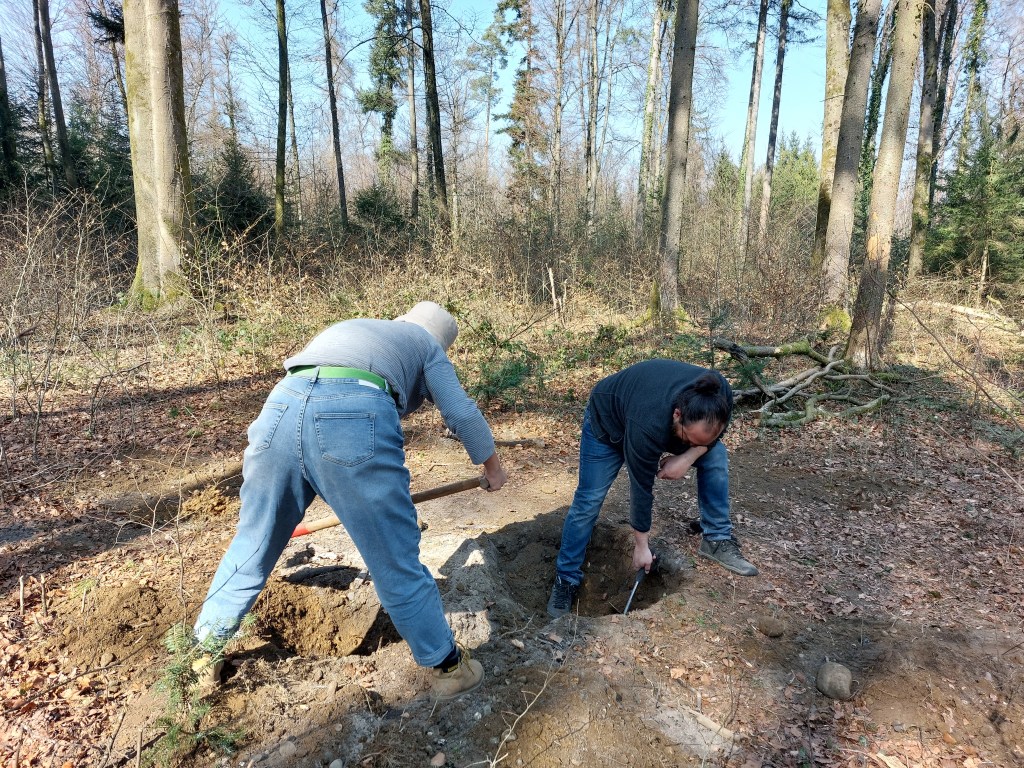
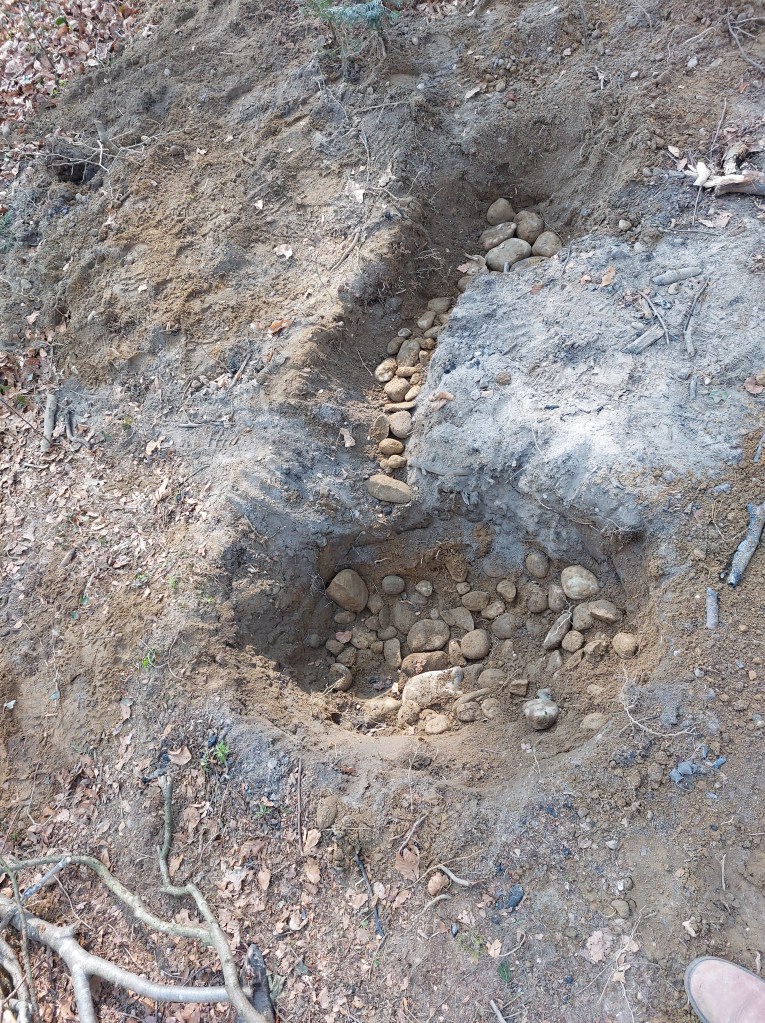
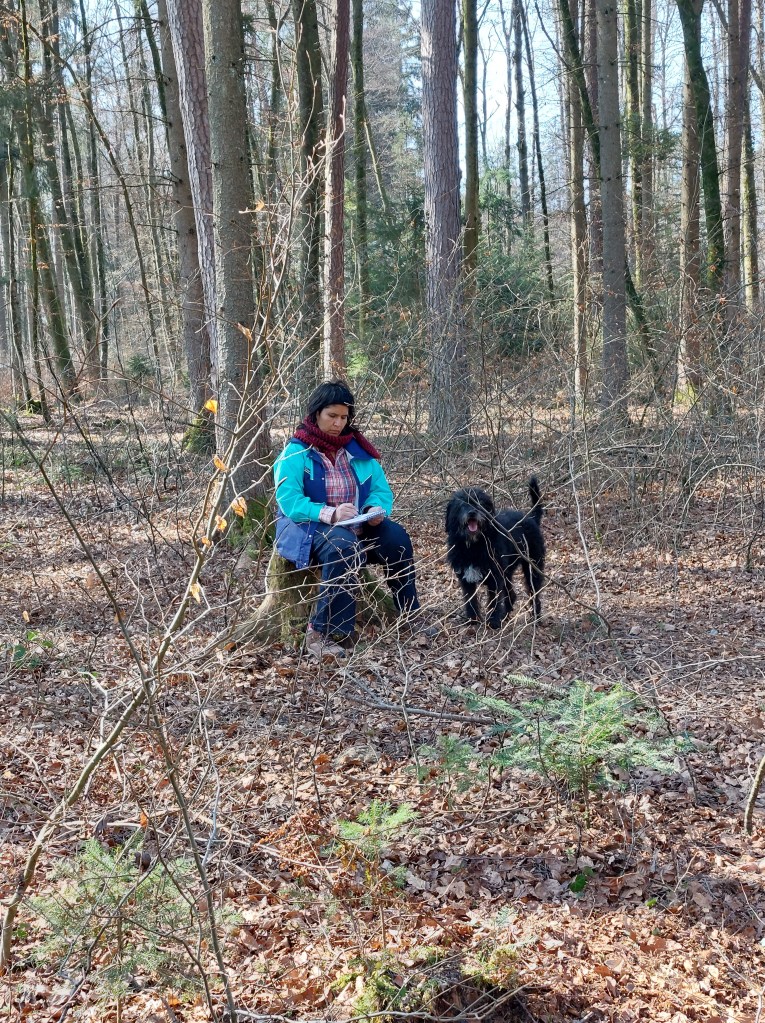
Al rato llegamos a otra zona protegida: Gippinger Grien. Nos desviamos de este camino para salir de la zona protegida y buscar un lugar donde hacer nuestra comida. Nos metimos entre los bosques, subimos algunas colinas ayudándonos con palos, y encontramos una zona en la que Paloma pudo hacer su horno en pozo. Nos preguntó con qué forma queríamos hacerlo y, después de varias ideas, decidimos hacerlo con la forma de las islas de juncos que vimos al inicio del paseo. Con la pala que habíamos estado llevando hicimos el hoyo. Luego le hicimos una base de piedras y buscamos ramas para encender el fuego. Sobre la parrilla pusimos los vegetales que habíamos llevado, rellenos de un pesto de bärlauch hecho por Paloma. También hicimos un té con hiervas recolectadas. Comimos cerca del fuego, intentando abrigarnos del viento que soplaba, y también nos leímos en voz alta. Gabriela nos leyó un fragmento del libro «La cocina de los incas» de Rosario Olivas Weston sobre la Huatia: un horno para cocinar tubérculos hecho con tierra endurecida o con adobe, que se llena, luego se derrumba y se cubre con tierra. Al rato se escarba, se retiran los tubérculos, se limpian y se comen. También nos leyó sobre la técnica de la Pachamanca, la cocción sobre piedras calientes. Yo, por mi parte, leí un fragmento del libro «To the river» de Olivia Laing.
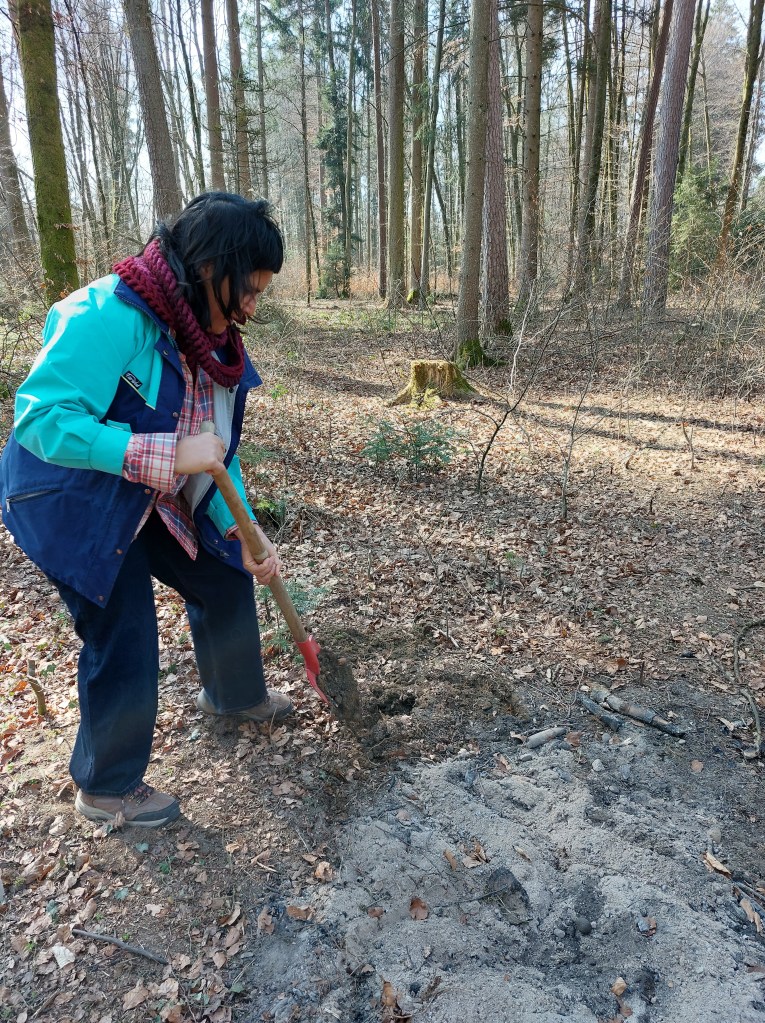
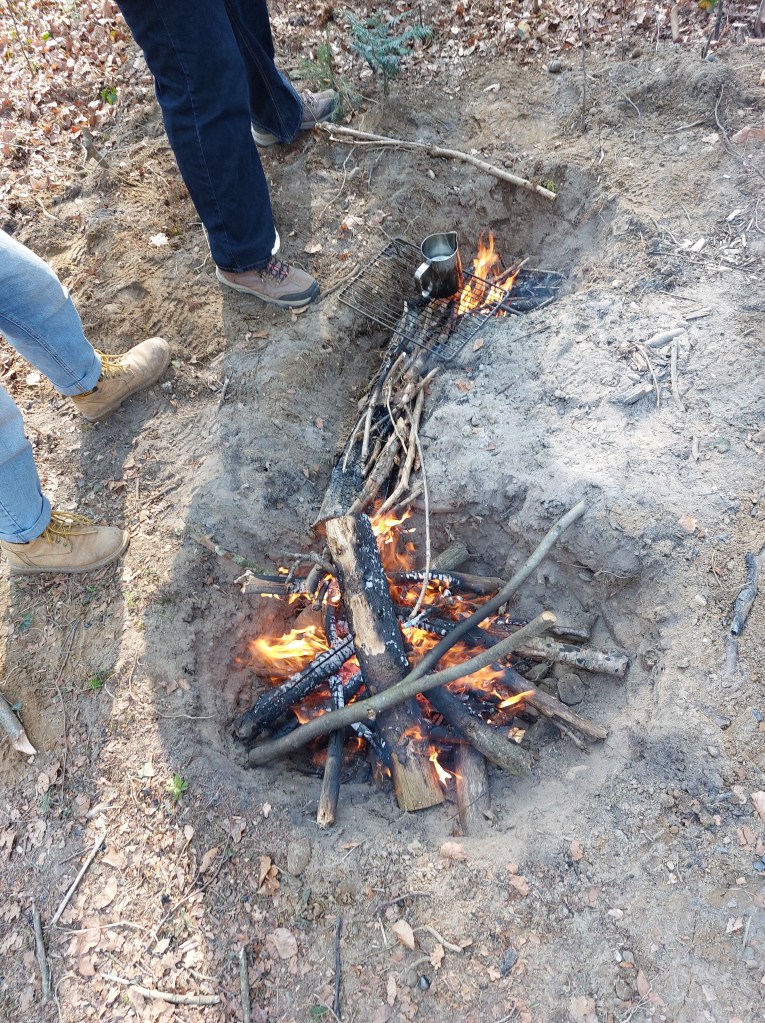
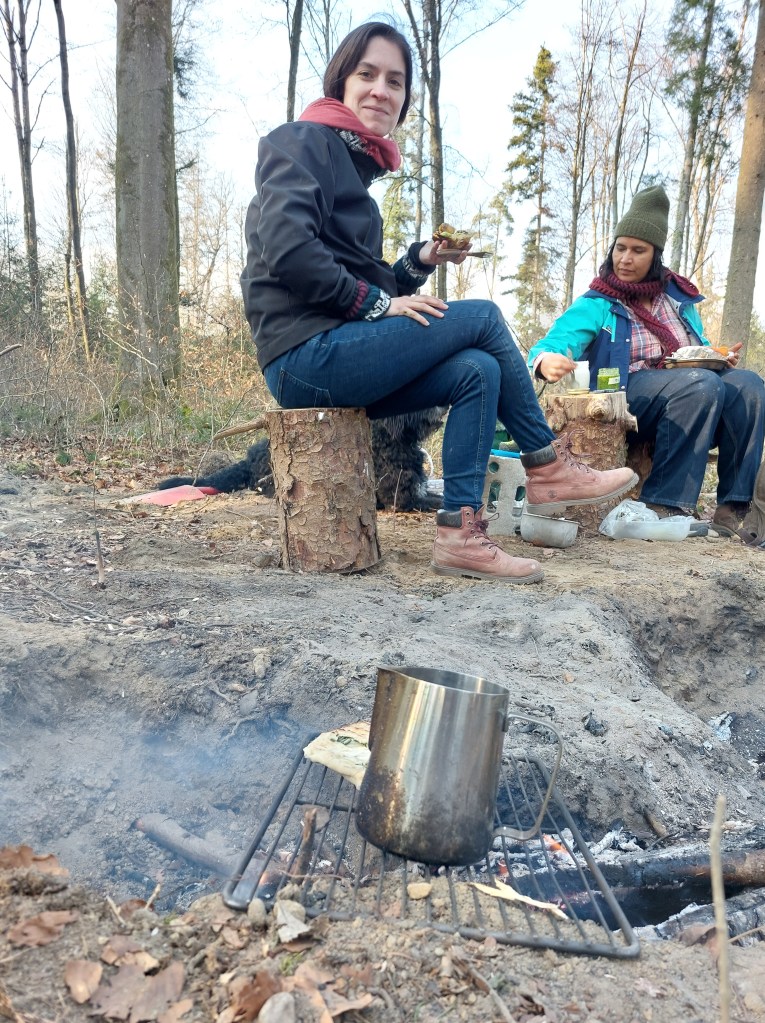
Cuando terminamos nuestra pausa, apagamos el fuego, tapamos el horno y retomamos nuestro camino hacia el río encontrándonos con Tom y Yannick. Juntos caminamos siguiendo al Aare hasta su desembocadura en el Rin. Despedimos al primero, saludamos al segundo y, ya con frío y cansados, fuimos en el auto de Yannick hasta Brugg donde nos volvimos a encontrar con Paloma y Raco, quienes fueron a buscar el suyo, para tomar una merienda caliente antes de regresar cada uno a su casa.
Al día siguiente de esta caminata, me enfermé. Quizás por eso se me pasó el momento de hacer el registro. Quizás fue la vida y sus ocupaciones. Pero acá está. Recuerdo que fue un paseo con el foco en los alimentos y el modo de cocinarlos; muy interesante. El único paseo del 2022. Este proyecto se toma sus tiempos pero, si todo va bien, mañana volvemos a donde lo dejamos en pausa: Koblenz.
ENGLISH
Before I start, I should clarify that I was very messy with the registration of this walk. We did the walk in March 2022. Today I am writing on a day in July 2023. Time passed without me making this record, so today, when I finally decided to do it, it will no longer be as faithful or as close as the other records, but more of a «I remember».
Let us begin then. I remember that Paloma, Raco, their dog and Gabriela, an artist friend of Paloma’s who lives in Basel and who, like her, also bases her research on food, came on this walk.

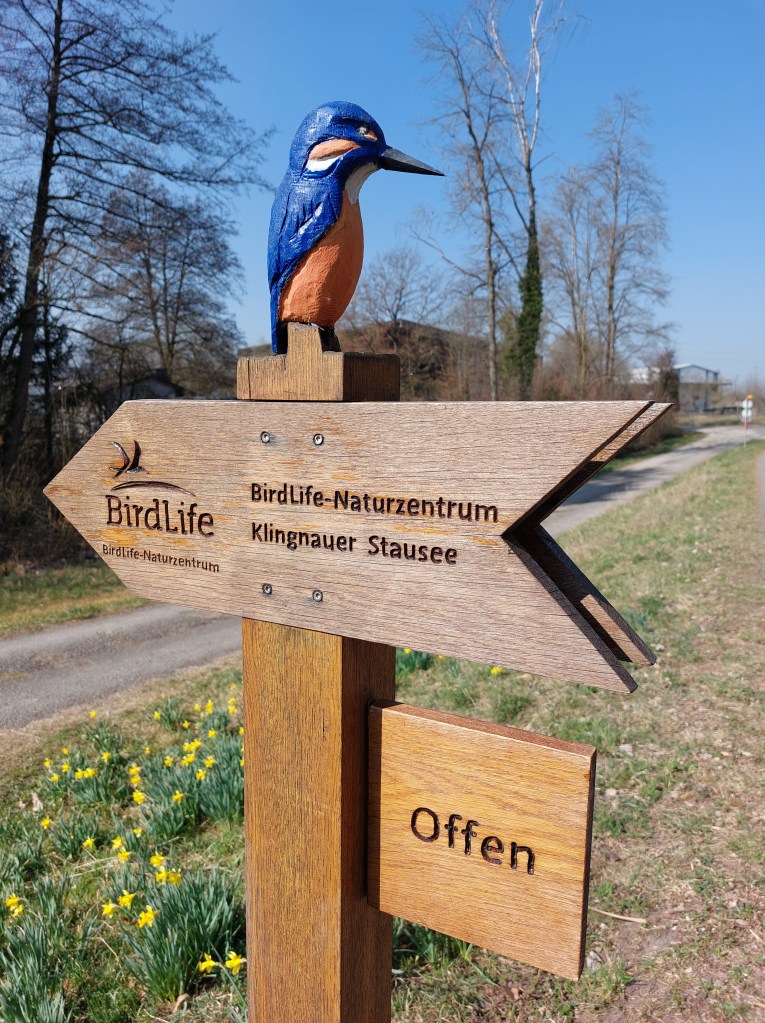
We set off from Döttingen where we bought some breakfast while we started our walk along the Aare. As soon as we started, we came across wooden structures where one could watch birds such as kingfishers and insects such as dragonflies and butterflies. The BirdLife-Naturzentrum Klingnauer Stausee is located where the river becomes a reservoir. According to its website, until the middle of the 19th century, the Aare flowed freely through the lower Aare valley, periodically flooding large areas and continuously reshaping the landscape, that is, what a river does naturally. It was one of the largest floodplain landscapes in Switzerland, with great biodiversity; bison, otters and salmon were native to the area. To prevent villages from flooding and to use the alluvial land, the Aare was straightened around 1900, making it a narrow, straight channel; a story we are all familiar with. As a result, the habitat was altered and biodiversity declined. Later, in the 1930s, the Aare power station was built near Klingnau. The Aare was dammed, the water level rose several metres and the river became a reservoir. This destroyed further remnants of the original floodplain but, at the same time, the reservoir provided a new habitat for waterfowl. In the shallow areas, reeds, bushes and trees spread out to form the reed islands and the Kleindöttingen alluvial forest as it looks today. Today, the water surface has once again become an area of great ecological value. However, in order to maintain this diversity in the long term, regular maintenance work and interventions are necessary.
We observed the yellow reed islands from a high platform next to the river. They have rounded shapes.

We continued our way along a route where on the right we had the river and on the left a small canal, the «Binnenkanal». Paloma once again became a harvester, collecting fruits and plants for our lunch. Gabriela accompanied her. Of the plants she showed us, I took a photo of a violet flower and a leaf that seems to be of the Galium family.
After a while we reached another protected area: Gippinger Grien. We turned off this path to get out of the protected area and look for a place to have our lunch. We went into the woods, climbed some hills with the help of sticks, and found an area where Paloma could make her pit oven. She asked us what shape we wanted to make it in and, after several ideas, we decided to make it in the shape of the reed islands we saw at the beginning of the walk. With the shovel we had been carrying we made the hole. Then we made a base of stones and looked for branches to light the fire. On the grill we put the vegetables we had brought with us, filled with a bärlauch pesto made by Paloma. We also made tea from the collected herbs. We ate near the fire, trying to keep warm from the wind, and we also read aloud to each other. Gabriela read us an excerpt from the book «La cocina de los incas» by Rosario Olivas Weston about the Huatia: an oven for cooking tubers made of hardened earth or adobe, which is filled, then collapsed and covered with earth. After a while, the tubers are dug, removed, cleaned and eaten. She also read us about the technique of Pachamanca, cooking on hot stones. I, for my part, read an excerpt from the book «To the river» by Olivia Laing.
When our break was over, we put out the fire, covered the oven and resumed our walk towards the river, meeting up with Tom and Yannick. Together we walked along the Aare as it flows into the Rhine. We said goodbye to the first one, said hello to the second one and, cold and tired, we went in Yannick’s car to Brugg where we met up again with Paloma and Raco, who went to get theirs, to have a hot drink before going back home.
The day after this walk, I got sick. Maybe that’s why I missed the time to do the registration. Maybe it was life and its occupations. But here it is. I remember it was a walk with the focus on food and how to cook it; very interesting. The only walk of 2022. This project takes its time but, if all goes well, tomorrow we will be back where we left off: Koblenz.

 Despaseando
Deja un comentario